Cold Drawn Steel Tubes: Process Procedures, Work Hardening and Heat Treatment
News Details
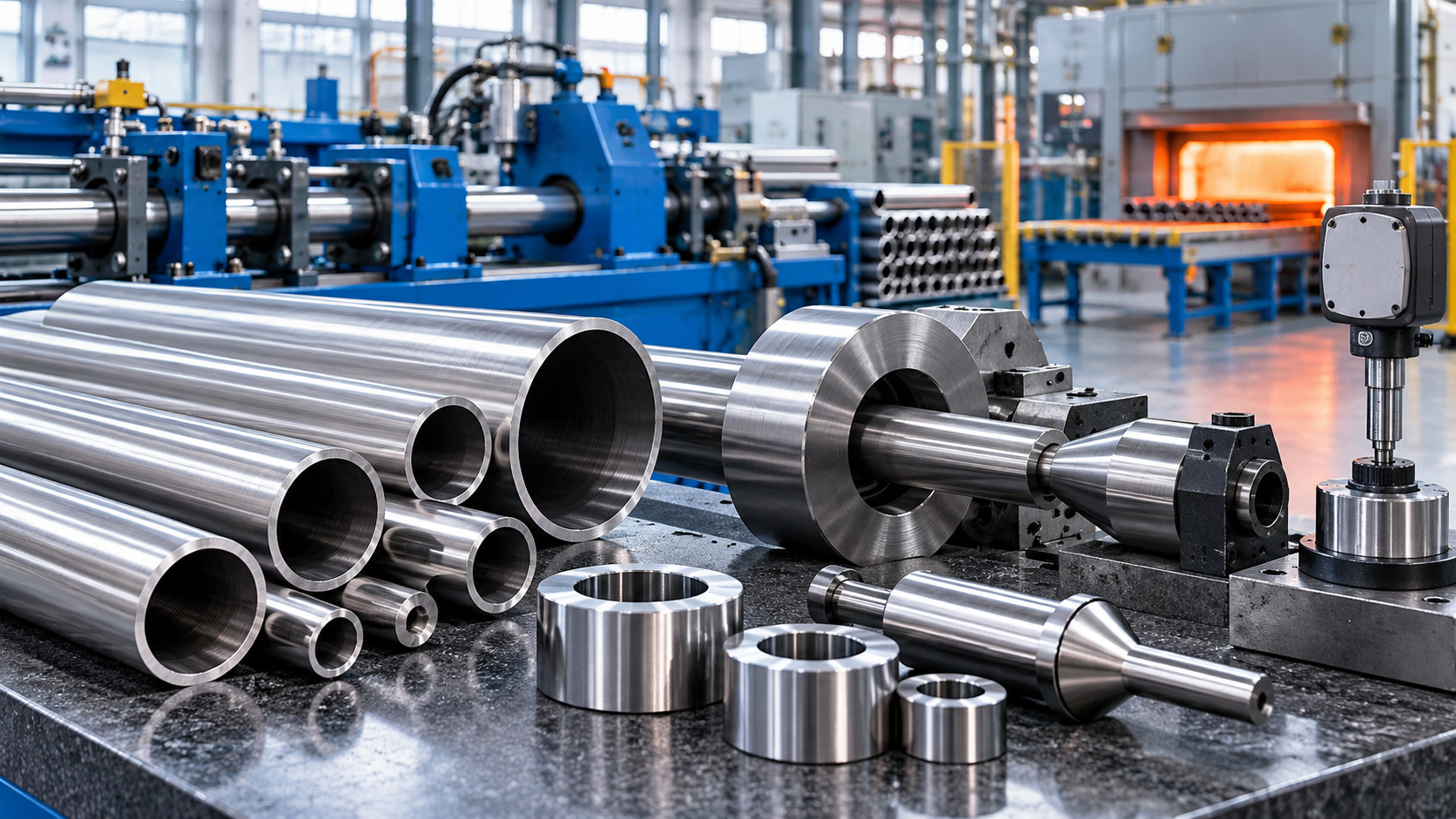
Cold drawing is one of the most important methods used to make high-accuracy steel tubes. For buyers in hydraulic, automotive, agricultural and machinery industries, the cold drawing steel tube process can improve size control, surface finish and mechanical strength.
A cold drawn precision tube is not made by chance. It needs the right raw tube, correct tooling, stable drawing force, suitable lubrication and proper steel tube heat treatment. Each step affects the final ID, OD, wall thickness, straightness and surface quality.
FAKESI focuses on seamless steel tubes, precision steel tubes, PTO drive shaft tubes and special-shaped steel tubes. These products are widely used in hydraulic cylinders, pneumatic cylinders, drive shafts, motor housings, smart locks, auto parts and engineering machinery. In these fields, cold drawing helps turn a basic tube into a stable industrial component.
What Is Cold Drawing for Steel Tubes?
Cold drawing is a forming process carried out at room temperature or near room temperature. During the process, a steel tube is pulled through a die. In many cases, a mandrel or plug is also used inside the tube.
The die controls the outer diameter. The mandrel helps control the inner diameter and wall thickness. As the tube passes through the tooling, its size changes and its surface becomes more accurate.
Compared with hot-formed tubes, cold drawn tubes usually offer better dimensional accuracy, smoother surfaces and stronger mechanical properties. Therefore, cold drawing is often used for tubes that need close tolerance or better performance.
Why Manufacturers Use Cold Drawing
Manufacturers use cold drawing because many applications need more than standard tube quality. A normal tube may be good enough for simple structures. However, precision parts need tighter control.
Cold drawing can help improve:
- OD and ID tolerance
- Wall thickness uniformity
- Surface finish
- Roundness
- Straightness after finishing
- Tensile strength and yield strength
- Machining performance
As a result, cold drawn tubes are widely used in hydraulic cylinders, pneumatic cylinders, agricultural drive shafts, automotive transmission shafts and precision mechanical parts.
Step 1: Raw Tube Selection
The process starts with the raw tube. This may be a seamless steel tube or another suitable tube blank. The starting tube must have the right steel grade, wall thickness, surface condition and size allowance.
If the raw tube has poor quality, cold drawing cannot fully fix every problem. For example, deep surface defects, uneven wall thickness or internal cracks may remain after processing. Therefore, raw material inspection is a key first step.
At this stage, manufacturers check the tube size, appearance and material certificate. For demanding orders, they may also check chemical composition and mechanical properties.
Step 2: Surface Preparation
Before drawing, the tube surface must be prepared. This helps reduce friction and protect both the tube and tooling.
Common preparation steps may include cleaning, pickling, phosphating, lubrication or other surface treatment. The exact method depends on the steel grade and drawing plan.
Good lubrication is very important. Without it, the drawing force may become too high. The tube surface may scratch, and the die may wear faster. In severe cases, the tube may crack or seize during drawing.
Step 3: Pointing and Drawing
Next, one end of the tube is reduced or pointed so it can pass through the die and be gripped by the drawing machine.
Then the tube is pulled through the die. Depending on the product requirement, the manufacturer may use different drawing methods, such as sink drawing, mandrel drawing or plug drawing.
Sink drawing mainly controls the outer diameter. Mandrel or plug drawing gives better control of the inner diameter and wall thickness. For a cold drawn precision tube, the choice of tooling has a strong effect on the final result.
Sometimes one pass is enough. However, for tighter tolerances or larger size changes, several drawing passes may be needed. Between passes, heat treatment may also be required to restore formability.
Step 4: Work Hardening During Cold Drawing
Cold drawing changes the steel structure. As the tube is pulled and reduced, the metal deforms. This process increases strength and hardness. It is called work hardening.
Work hardening can be useful. It can raise tensile strength, improve yield strength and make the tube more resistant to deformation. This is helpful for some mechanical parts and drive shaft applications.
However, work hardening also reduces ductility. In simple terms, the tube becomes stronger but less easy to bend or form. If drawing continues too much without proper control, the tube may crack or become difficult to process.
Therefore, manufacturers must balance strength and formability. They choose the right reduction ratio, drawing passes and heat treatment plan based on the final use.
Step 5: Steel Tube Heat Treatment
Steel tube heat treatment is often used before, between or after cold drawing. It helps control hardness, stress and mechanical properties.
Common heat treatment goals include:
- Reducing internal stress
- Improving ductility
- Making the tube easier to draw again
- Adjusting final hardness and strength
- Improving dimensional stability
- Preparing the tube for machining or use
For example, annealing can soften the tube after work hardening. Stress relieving can reduce internal stress while keeping much of the strength. Normalizing or other treatments may be used based on the steel grade and performance needs.
The right heat treatment depends on the tube material, drawing amount and application. A hydraulic cylinder tube may need stable size and good surface performance. A drive shaft tube may need strength, toughness and torque resistance. So, the heat treatment plan should match the end use.
Step 6: Straightening and Finishing
After drawing and heat treatment, the tube may need straightening. Cold drawing and thermal stress can cause slight bending. Straightening helps meet the required straightness tolerance.
Then the tube may be cut to length, polished, honed, skived, roller burnished or machined, depending on the product type.
For hydraulic and pneumatic cylinder tubes, inner surface finish is very important. For PTO drive shaft tubes, profile accuracy and straightness matter a lot. For motor housings and auto parts, OD accuracy and machining allowance may be the key points.
In each case, finishing turns the drawn tube into a more application-ready product.
Step 7: Inspection and Quality Control
Inspection confirms whether the tube meets the order requirements. For precision tubes, this step must be detailed and consistent.
Common checks include:
- Outer diameter
- Inner diameter
- Wall thickness
- Length
- Straightness
- Roundness
- Surface roughness
- Hardness
- Mechanical properties
- Visual surface defects
For custom products, inspection can follow the buyer’s drawing or agreed standard. This helps ensure that the tube is ready for assembly, machining or direct use.
How Cold Drawing Affects Tube Performance
Cold drawing can improve many tube properties. However, the result depends on process control.
A well-made cold drawn tube can offer high size accuracy, stable wall thickness and a clean surface. It can also improve strength due to work hardening. After suitable heat treatment, it can gain the right balance of strength, toughness and ductility.
On the other hand, poor process control can create problems. These may include cracking, high residual stress, uneven hardness, poor straightness or surface scratches.
Therefore, buyers should work with a manufacturer that understands both forming and final application.
Applications of Cold Drawn Precision Tubes
Cold drawn precision tubes are used in many industries because they offer stable size and good performance.
Common applications include:
- Hydraulic cylinder tubes
- Pneumatic cylinder tubes
- Agricultural PTO drive shaft tubes
- Automotive transmission shaft tubes
- Auto and motorcycle parts
- Motor housings
- Smart lock parts
- Engineering machinery components
- Custom special-shaped steel tubes
These uses often require close tolerance, smooth surface quality and reliable mechanical properties. For this reason, the cold drawing steel tube process is widely used for industrial tube production.
What Buyers Should Confirm Before Ordering
Before ordering cold drawn steel tubes, buyers should provide clear technical details. This helps the manufacturer choose the right production route.
Important information includes:
- Steel grade or material standard
- Tube type, such as seamless, precision or special-shaped tube
- OD, ID and wall thickness
- Tolerance requirements
- Length and straightness
- Surface roughness
- Heat treatment condition
- Mechanical property requirements
- Final application
- Drawing or sample, if available
In addition, buyers should explain whether the tube will be welded, machined, coated, assembled or used directly. This helps avoid over-processing or under-processing.
FAKESI Cold Drawn Steel Tube Solutions
FAKESI is a professional steel tube manufacturer with more than 30 years of experience. The company supplies seamless steel pipes, high-precision precision steel pipes, PTO drive shaft tubes and special-shaped steel tubes.
With advanced cold drawing and finishing processes, FAKESI supports custom tube production for hydraulic cylinders, pneumatic cylinders, agricultural machinery, automotive transmission parts and engineering machinery.
FAKESI can also produce special-shaped tubes, including lemon, oval, square, rectangular, triangle, star and other custom profiles. For B2B buyers, this means one supplier can support both standard precision steel tubes and custom profile tube needs.
Conclusion
Cold drawing is a key process for making accurate and reliable steel tubes. It improves size control, surface quality and strength. At the same time, work hardening and steel tube heat treatment must be managed carefully.
When the process is well controlled, a cold drawn precision tube can support better assembly, longer service life and more stable performance.
For buyers who need precision steel tubes, hydraulic cylinder tubes, PTO drive shaft tubes or custom special-shaped tubes, FAKESI can help match the cold drawing process, heat treatment and finishing steps to the real working conditions of the product.


