Steel Tube Surface Roughness: Ra, Rz and Application Implications
News Details
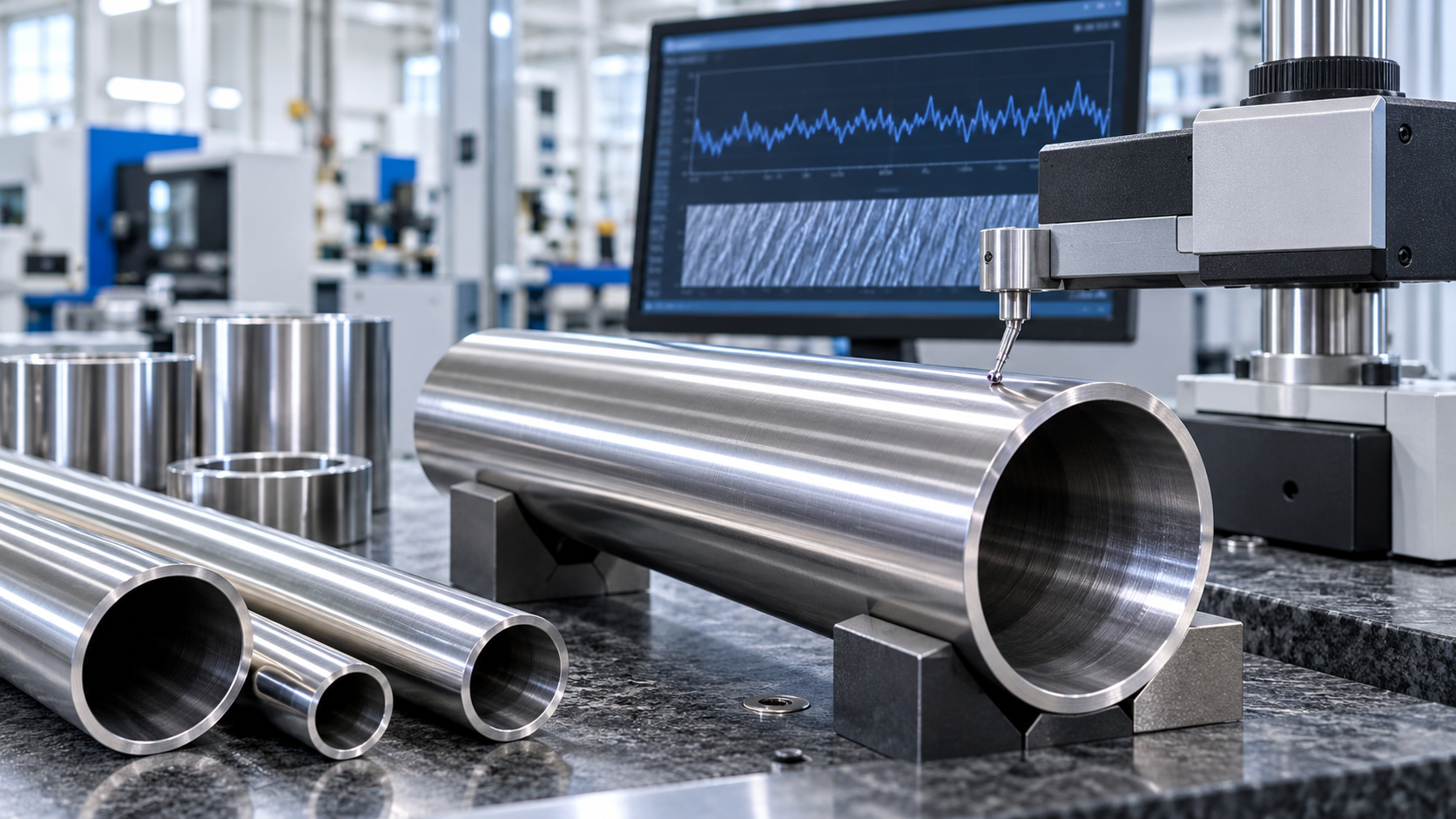
Steel tube surface roughness may look like a small detail. However, it has a direct effect on sealing, friction, oil retention, wear, noise and service life. For buyers of precision steel tube products, surface quality is often just as important as size tolerance, straightness and material grade.
This is especially true for a hydraulic cylinder tube. The inner surface must work with piston seals under pressure. If the surface is too rough, it may cut seals and cause leakage. If it is too smooth, it may not hold enough oil film. As a result, the cylinder may wear faster or work less smoothly.
FAKESI manufactures precision steel tubes, seamless steel tubes, PTO drive shaft tubes and special-shaped steel tubes for hydraulic, pneumatic, agricultural, automotive and machinery uses. In these fields, steel tube surface roughness is not only a number on a drawing. It is a key part of product performance.
What Is Steel Tube Surface Roughness?
Surface roughness describes the small peaks and valleys on a tube surface. These marks may come from hot rolling, cold drawing, machining, honing, skiving, polishing or other finishing steps.
To the eye, a tube may look smooth. Yet under measurement, the surface can show clear micro-level differences. These differences affect how the tube contacts seals, bearings, bushings, oil, grease or other metal parts.
For steel tubes, surface roughness may be measured on the outer diameter, inner diameter or both. The key surface depends on the final use. For example, the bore of a hydraulic cylinder tube is often more critical than the outside surface. However, an outer surface may matter more for tubes that are fitted into housings or machined after delivery.
Ra: The Common Roughness Value
Ra is one of the most common surface roughness values. It shows the average roughness over a measured length. In simple terms, Ra gives a general idea of how smooth or rough a surface is.
A lower Ra usually means a smoother surface. A higher Ra means a rougher surface. Because it is easy to understand and widely used, many drawings include Ra as the main surface finish requirement.
However, Ra is an average value. Therefore, it may not show deep scratches or sharp peaks clearly enough. Two surfaces can have the same Ra but behave differently in real use. This is why buyers and engineers may also check Rz.
Rz: Peak-to-Valley Roughness
Rz measures the height difference between surface peaks and valleys within the measured area. It gives a better view of the surface profile, especially when sharp peaks or deep grooves are present.
This matters because sharp peaks can damage seals. Deep valleys can hold oil, but they may also trap dirt or create weak contact zones. So, Rz helps engineers understand more than general smoothness.
For a hydraulic cylinder tube, Ra and Rz are often considered together. Ra shows average finish. Rz shows how severe the surface profile is. Together, they give a clearer picture of how the tube will perform.
Why Roughness Matters in Hydraulic Cylinder Tubes
A hydraulic cylinder tube must support smooth piston movement under pressure. The inner bore works against seals during every stroke. Because of this, surface finish affects both efficiency and service life.
If the bore is too rough, seal lips may wear quickly. This can lead to oil leakage, pressure loss and downtime. In heavy-duty equipment, even a small leakage problem can stop a full system.
If the bore is too smooth, the surface may not keep a stable oil film. Without enough oil film, friction can rise. Then, the seal may heat up, stick or wear unevenly.
So, the best surface is not always the smoothest surface. Instead, it is the surface that matches the seal material, pressure level, stroke speed and working environment.
Roughness and Friction
Surface roughness has a close link with friction. A rougher surface creates more contact points. As a result, sliding parts may need more force to move. This can reduce system efficiency.
At the same time, some controlled micro-valleys can help hold lubricant. This is useful in hydraulic and mechanical parts because the oil film reduces direct metal-to-seal or metal-to-metal contact.
Therefore, roughness control is about balance. Manufacturers must avoid harmful peaks while keeping a surface that can support stable lubrication.
Roughness and Wear Resistance
Wear often begins at the surface. If the tube surface has scratches, scale, pits or sharp high points, these areas can become starting points for damage.
In a precision steel tube, a stable surface finish helps reduce early wear. It also helps the tube work more predictably with seals, bushings and mating parts.
For rotating or sliding components, poor surface finish may cause noise, heat and vibration. Over time, this can shorten the life of the full assembly. Therefore, roughness control helps protect both the tube and the parts around it.
Roughness and Corrosion Risk
Surface roughness can also affect corrosion. Rough surfaces may hold moisture, dirt or chemical residue more easily. In some working environments, this can speed up rust or pitting.
A smoother and cleaner surface is often easier to protect with oil, coating or packaging. However, the required finish still depends on the final use. For example, a tube that will be machined after delivery may not need the same surface finish as a finished cylinder barrel.
This is why buyers should explain the application clearly when requesting a quote.
How Manufacturers Control Surface Roughness
Surface roughness is controlled through both process design and inspection. For precision steel tubes, several steps may be used.
Cold drawing can improve dimensional accuracy and surface quality compared with rough hot-formed tubes. During cold drawing, the tube is shaped through dies and, in some cases, over a mandrel. This helps improve the tube’s inner and outer surface condition.
For hydraulic cylinder tubes, honing or skiving and roller burnishing may be used to finish the bore. Honing removes small surface defects and creates a controlled cross-hatch pattern. Skiving and roller burnishing can produce a smooth and stable bore with good dimensional control.
After finishing, tubes are inspected with surface roughness testers. Visual checks are also important because scratches, dents and handling marks may affect real performance even when average roughness values look acceptable.
Ra and Rz Should Match the Application
There is no single roughness value that fits every tube. The right Ra and Rz depend on the application.
For hydraulic cylinder tubes, the bore finish must support seal life, oil film and pressure stability. For pneumatic cylinders, smooth movement and low friction may be the main goals. For automotive and agricultural drive shaft tubes, the outside surface may need to support welding, coating, balancing or machining.
For motor housings, smart lock parts and precision mechanical components, surface finish may affect assembly accuracy and appearance. For special-shaped steel tubes, the surface requirement may vary by contact area and profile shape.
Because of this, buyers should not only request a “smooth tube.” Instead, they should define the measured surface, roughness value and inspection method.
What Buyers Should Include in an RFQ
A clear RFQ helps the tube manufacturer choose the right production route. It also helps avoid cost and delivery issues.
When surface roughness matters, buyers should provide:
- Tube type and steel grade
- OD, ID and wall thickness
- Required tolerance
- Surface to be measured: ID, OD or both
- Required Ra and Rz values
- Application, such as hydraulic cylinder tube or machined part
- Heat treatment needs
- Straightness requirements
- Surface protection or packing needs
- Drawing, standard or sample, if available
In addition, buyers should state whether the tube will be used directly or machined later. This affects the required finish and cost.
FAKESI Precision Steel Tube Solutions
FAKESI has over 30 years of experience in steel tube manufacturing. The company supplies seamless steel tubes, precision steel tubes, PTO drive shaft tubes and custom special-shaped steel tubes.
Its products are used in hydraulic cylinders, pneumatic cylinders, agricultural machinery drive shafts, automotive transmission shafts, auto and motorcycle parts, smart locks, motor housings and engineering machinery.
With cold drawing, finishing and strict quality control, FAKESI supports B2B buyers who need stable dimensions, reliable surface quality and custom tube solutions. For projects where steel tube surface roughness is critical, FAKESI can help review the application and match the tube process to the required performance.
Conclusion
Ra and Rz are more than surface numbers. They affect sealing, friction, lubrication, wear and long-term reliability.
For a hydraulic cylinder tube, the right surface roughness helps protect seals and reduce leakage. For a precision steel tube used in machining or assembly, it helps improve fit, finish and product life.
Therefore, buyers should define surface roughness early in the sourcing process. With clear drawings, correct Ra and Rz values and an experienced manufacturer like FAKESI, it becomes easier to get steel tubes that perform well in real working conditions.


