Oval, Square, Rectangular and D-Shaped Tubes: How to Select a Custom Profile
News Details
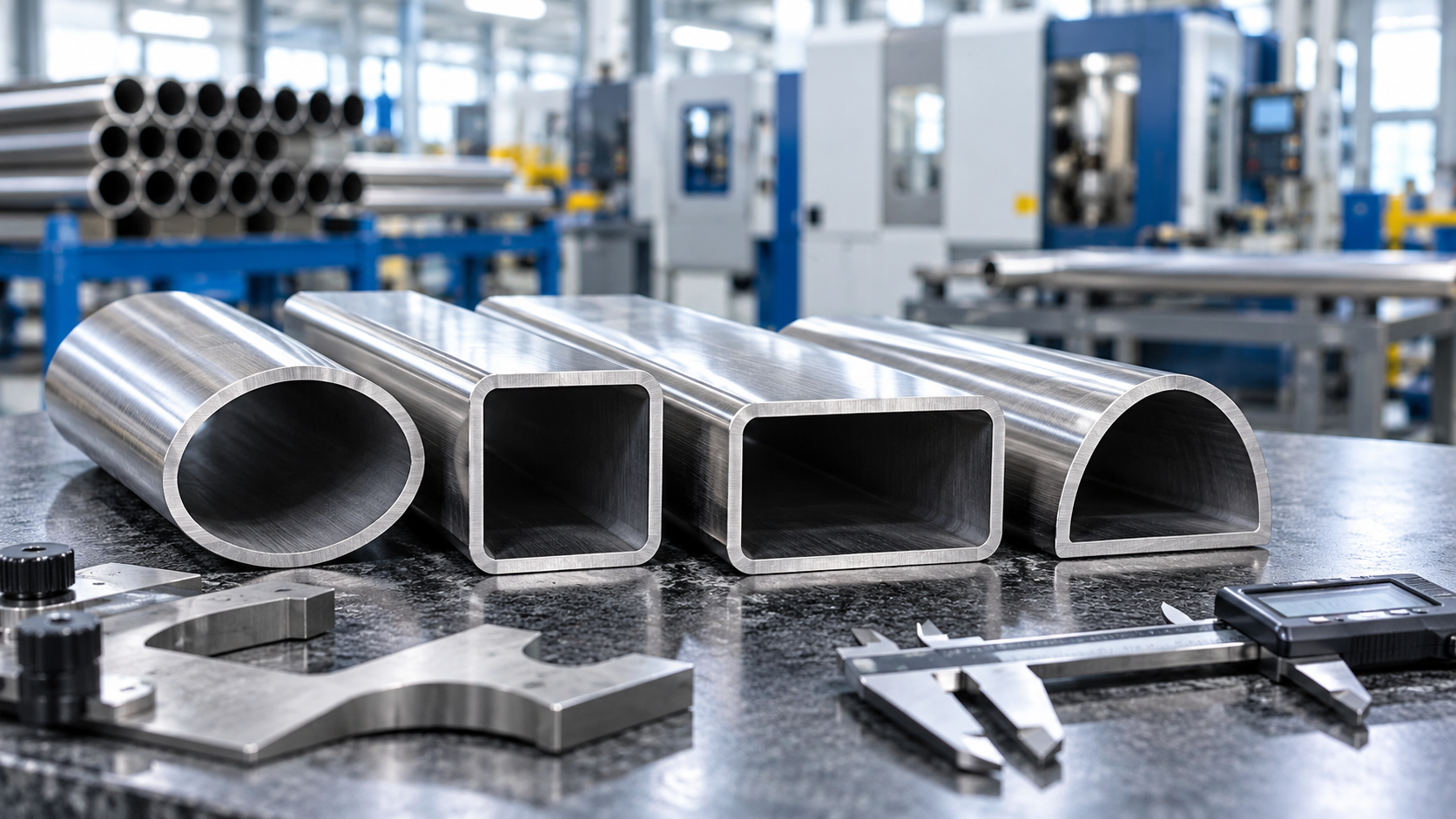
Round steel tubes are commonly used, but they are not always the best fit. In many parts, the tube must resist torque, guide movement, fit into a limited space, support welding, or match a special assembly. In these cases, a special shaped steel tube can deliver better performance.
FAKESI manufactures seamless steel pipes, precision steel tubes, PTO drive shaft tubes, and special-shaped steel tubes for agriculture, automotive, machinery, hydraulic, pneumatic, and transmission applications. With cold drawing and custom tooling, FAKESI can produce oval, square, rectangular, D-shaped, lemon, triangle, star, and other custom profiles.
So, how should buyers choose the right custom profile? The answer depends on load, fit, space, forming method, machining needs, and final use.
What Is a Special Shaped Steel Tube?
A special shaped steel tube is a tube with a non-round cross-section. Instead of a standard circular shape, it may be oval, square, rectangular, D-shaped, triangle, lemon-shaped, star-shaped, or fully custom.
These tubes are often used when a round tube cannot meet the design need. For example, a round tube may rotate inside a mating part, while a square or D-shaped tube can improve positioning. Also, an oval steel tube may save space while still providing good strength.
Because the profile affects the tube’s function, shape selection should start early in the design stage.
Why Choose a Custom Tube Profile?
A custom profile can solve real engineering problems. It can improve part fit, reduce extra machining, increase torque transfer, or simplify assembly.
In many cases, the profile is selected for one or more of these reasons:
- Better anti-rotation performance
- Higher bending strength in one direction
- Easier welding or mounting
- Space-saving design
- Better sliding or guiding function
- Improved appearance
- Reduced part count
- Better torque or transmission performance
However, each shape has its own strengths and limits. Therefore, buyers should match the tube profile to the real working condition, not just the drawing shape.
Oval Steel Tube: Smooth Shape and Space Efficiency
An oval steel tube is often used when the part needs a smooth shape, good appearance, and better space use than a round tube. The oval profile can offer good bending resistance along one direction while keeping a clean and compact form.
Oval tubes are useful for frames, handles, support arms, machinery parts, and some automotive or motorcycle components. They can also reduce sharp edges, which helps in applications where appearance or contact comfort matters.
However, oval tubes need careful control during forming. The long axis, short axis, wall thickness, and round transition areas must remain stable. If the tube will be welded, coated, or assembled into another part, these dimensions should be defined clearly.
Square Seamless Tube: Strong Fit and Stable Positioning
A square seamless tube is a good choice when the part needs stable positioning, anti-rotation performance, and clear flat surfaces. The four sides make it easier to weld, clamp, drill, or mount.
Square tubes are often used in machinery frames, structural parts, guide parts, drive components, and custom mechanical assemblies. Compared with a round tube, a square tube can provide better contact on flat surfaces and reduce unwanted rotation.
For precision applications, buyers should confirm side length, wall thickness, corner radius, straightness, and twist. These details affect assembly quality. In addition, seamless construction can support better strength and reliability where welded seams are not preferred.
Rectangular Tube: Directional Strength and Compact Design
A rectangular tube is useful when the load is stronger in one direction. Its long side and short side allow engineers to design for bending strength while saving space.
For example, a rectangular tube can be placed with the taller side facing the main load direction. This can improve stiffness without using a larger round tube. As a result, it may reduce weight or fit better into a narrow assembly.
Rectangular tubes are widely used in machinery, automotive parts, support structures, agricultural equipment, and custom frames. Still, the buyer should confirm which direction carries the main load. This helps the manufacturer and end user avoid wrong orientation during assembly.
D Shaped Tube: Flat Side Plus Curved Surface
A D shaped tube combines one flat side with one curved side. This profile is useful when the tube needs a flat mounting face and a rounded outside surface.
The flat side can help with positioning, welding, bonding, or fixing. Meanwhile, the curved side can improve appearance, reduce interference, or match a mating part. Because of this, D shaped tube products are often used in mechanical assemblies, vehicle components, guide rails, handles, and special equipment parts.
When choosing a D-shaped profile, buyers should define the flat width, overall height, radius, wall thickness, and tolerance. If the flat side is used as a locating surface, its straightness and flatness may also be important.
Key Factors When Selecting a Custom Profile
Choosing the right special shaped steel tube is easier when buyers focus on function first.
The main factors include:
- Load direction: Is the tube under bending, torsion, compression, or impact?
- Fit requirement: Does it slide, lock, clamp, or locate inside another part?
- Space limit: Is the part installed in a narrow or shaped space?
- Assembly method: Will it be welded, bolted, pressed, machined, or coated?
- Surface need: Is appearance, roughness, or coating adhesion important?
- Tolerance: Which dimensions are critical for fit or movement?
- Quantity: Is custom tooling suitable for the order volume?
- End use: Is it for agriculture, automotive, machinery, hydraulic, or another field?
In short, the best profile is the one that fits the job with stable production and reasonable cost.
Material and Manufacturing Considerations
Custom profile tubes can be made from different steel grades depending on strength, ductility, weldability, and machining needs. The right grade depends on the application.
Cold drawing is often used for precision profiles because it can improve dimensional accuracy and surface quality. During cold drawing, the tube is shaped through dies and tooling. This process helps control the profile, wall thickness, and surface finish.
However, more complex profiles may require more tooling work. Sharp corners, deep grooves, or uneven wall areas can increase forming difficulty. Therefore, buyers should share drawings early, so the manufacturer can review the profile and suggest practical changes if needed.
Tolerance, Straightness and Twist Control
For a custom profile, tolerance is not only about OD or wall thickness. Shape accuracy also matters.
Important checks may include:
- Side length or axis length
- Corner radius
- Wall thickness
- Flatness
- Straightness
- Twist
- Profile symmetry
- Surface condition
- Length tolerance
Twist is especially important for square, rectangular, D-shaped, and other non-round tubes. Even a small twist can cause assembly problems over a long length. Therefore, inspection should match the final use, not only the general tube standard.
When to Use a Custom Profile Instead of a Round Tube
A custom tube profile is a good option when a round tube creates extra work or limits performance.
For example, choose a special profile when:
- A round tube rotates when it should stay fixed
- Extra brackets are needed to create flat mounting points
- More torque transfer is required
- The design needs better space use
- The part must slide in a shaped guide
- Welding or locating needs flat contact
- The product needs a cleaner appearance
Although custom profiles may need tooling investment, they can reduce machining, welding, assembly time, and long-term failure risk.
Information Buyers Should Provide
To get the right custom profile steel tube, buyers should prepare clear technical information.
Useful RFQ details include:
- Tube shape, such as oval, square, rectangular, or D-shaped
- Steel grade or material standard
- Drawing with key dimensions
- Wall thickness
- Length and length tolerance
- Critical profile tolerance
- Straightness and twist requirements
- Surface finish or coating needs
- Heat treatment condition
- End application
- Annual quantity or batch size
- Sample requirements, if any
Also, if the current part has failed, buyers should explain the problem. For example, bending, twisting, poor fit, high wear, or assembly issues can all guide better profile selection.
FAKESI Custom Profile Tube Solutions
FAKESI has more than 30 years of experience in steel tube manufacturing. The company supplies precision steel tubes, seamless steel tubes, PTO drive shaft tubes, and special-shaped steel tubes for global industrial customers.
Its special-shaped tube range includes oval, square, rectangular, lemon, triangle, star, and other custom profiles. These tubes are used in agricultural machinery drive shafts, automotive transmission shafts, engineering machinery, motor housings, smart locks, hydraulic and pneumatic systems, and other industrial applications.
With custom tooling, cold drawing, finishing, and strict quality control, FAKESI helps buyers turn profile drawings into practical production parts.
Conclusion
Oval, square, rectangular, and D-shaped tubes each solve different design problems. An oval steel tube can save space and provide a smooth shape. A square seamless tube can improve positioning and anti-rotation performance. A rectangular tube can support directional strength. A D shaped tube can combine a flat mounting face with a curved outer surface.
Therefore, custom profile selection should be based on load, fit, assembly, tolerance, and final use. With the right design and an experienced manufacturer like FAKESI, a special shaped steel tube can improve product performance, reduce assembly work, and support stable long-term use.


