Cold-drawn steel tubes: process steps, work hardening and heat treatment
News Details
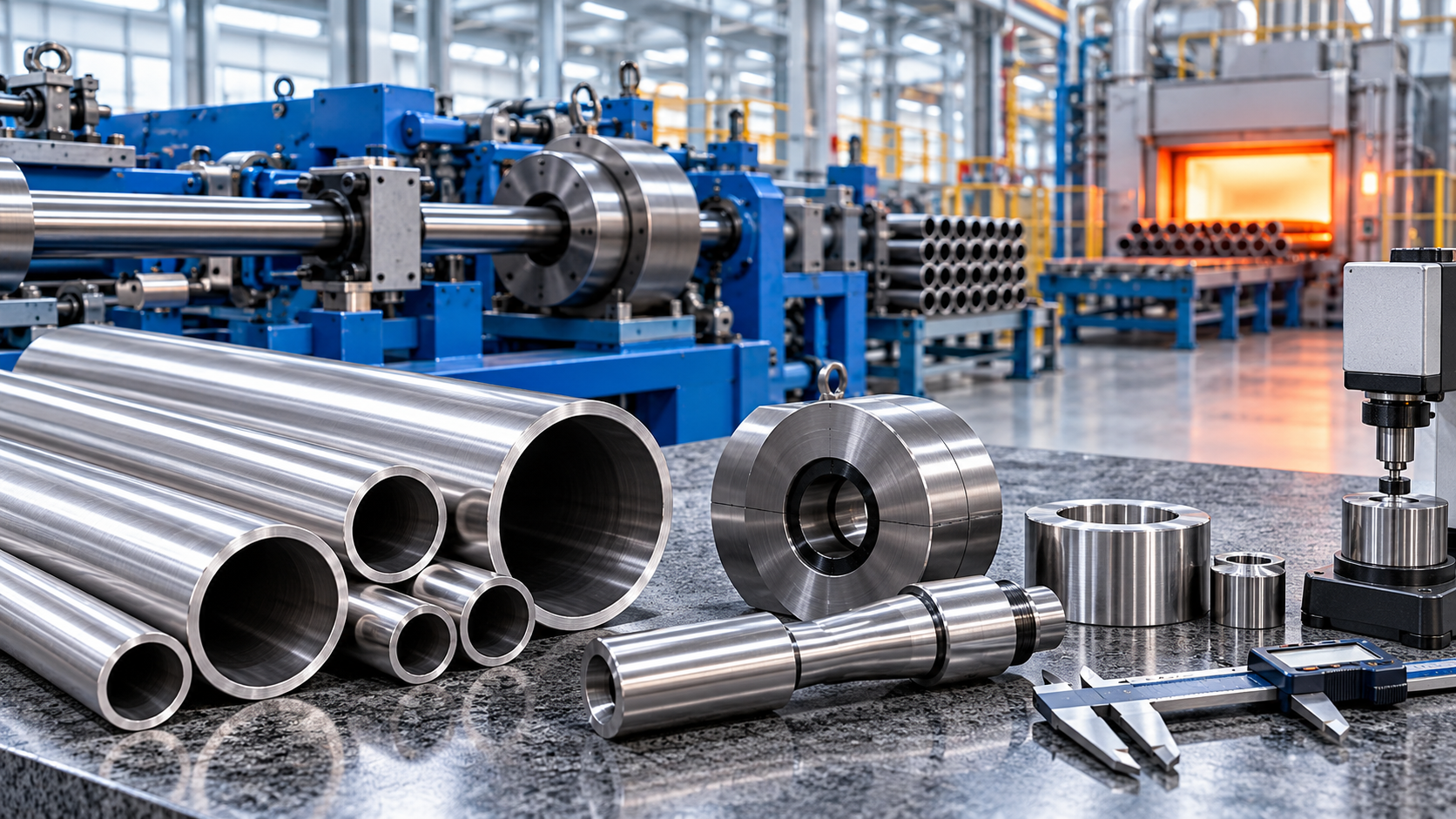
Cold drawing is a key process for making accurate and strong steel tubes. It helps improve tube size, surface quality and mechanical properties. For many industrial parts, this process can turn a basic tube into a high-value component.
A cold drawn precision tube is widely used in hydraulic cylinders, pneumatic cylinders, agricultural drive shafts, automotive transmission parts, motor housings and machinery parts. These applications need stable dimensions, smooth surfaces and reliable strength.
FAKESI manufactures seamless steel tubes, precision steel tubes, PTO drive shaft tubes and special-shaped steel tubes. With cold drawing, finishing and strict quality control, FAKESI supports buyers who need custom tube solutions for demanding industrial use.
What Is Cold Drawing for Steel Tubes?

Cold drawing is a forming process done at room temperature or near room temperature. During the process, a tube is pulled through a die. In many cases, a mandrel or plug is used inside the tube.
The die controls the outside shape and size. The mandrel or plug helps control the inside diameter and wall thickness. As a result, the tube becomes more accurate and smoother.
Compared with hot-formed tubes, cold drawn tubes often have tighter tolerances, better surface finish and higher strength. Therefore, the cold drawing steel tube process is often used when standard tube quality is not enough.
Why Cold Drawing Is Important
Many industrial parts need more than basic tube strength. They also need good fit, smooth movement and stable assembly.
Cold drawing can help improve:
- Outer diameter accuracy
- Inner diameter accuracy
- Wall thickness control
- Surface quality
- Roundness or profile accuracy
- Straightness after finishing
- Tensile strength
- Yield strength
- Machining performance
Because of these benefits, cold drawn tubes are common in hydraulic systems, automotive parts, agricultural machinery and precision mechanical components.
Step 1: Selecting the Tube Blank
The process starts with the tube blank. This blank may be a seamless steel tube or another suitable tube form. The material must match the final application.
At this stage, the manufacturer checks steel grade, tube size, wall thickness and surface condition. If the blank has deep defects, large wall variation or poor material quality, it may cause problems during drawing.
So, good raw material selection is the first step toward a reliable cold drawn precision tube.
Step 2: Cleaning and Surface Preparation
Before drawing, the tube surface must be cleaned and prepared. This helps reduce friction between the tube and the tooling.
Common preparation steps may include cleaning, pickling, phosphating and lubrication. The exact method depends on the steel grade and drawing requirement.
Good lubrication is very important. It protects the tube surface, lowers drawing force and reduces die wear. Without enough lubrication, the tube may scratch, crack or stick during drawing.
Step 3: Pointing the Tube End
Before the tube can pass through the die, one end must be reduced in size. This step is called pointing.
The pointed end allows the drawing machine to grip the tube and pull it through the die. Although this step may look simple, it must be done correctly. Poor pointing can affect drawing stability and may damage the tube end.
After pointing, the tube is ready for the main drawing step.
Step 4: Drawing Through the Die
During drawing, the tube is pulled through the die with strong and stable force. The tube diameter is reduced, and the wall may become more uniform.
There are several drawing methods. Sink drawing mainly controls the outside diameter. Mandrel drawing and plug drawing can give better control over the inside diameter and wall thickness.
For precision applications, tooling design is critical. Die size, mandrel size, drawing speed, lubrication and reduction ratio all affect the final result.
Sometimes one drawing pass is enough. However, tight tolerance tubes may need several passes. Between passes, heat treatment may be needed to restore ductility.
What Is Work Hardening?
Work hardening happens when steel is shaped by force during cold drawing. As the metal deforms, it becomes stronger and harder.
This can be useful. Higher strength can help the tube resist bending, pressure or torque. For drive shaft tubes and mechanical parts, this added strength may improve performance.
However, work hardening also reduces ductility. In simple words, the tube becomes less easy to form. If the process continues too far without control, the tube may crack or become too hard for later machining.
Therefore, manufacturers must balance strength and formability.
Why Steel Tube Heat Treatment Matters
Steel tube heat treatment is used to control hardness, stress and mechanical properties. It may be done before drawing, between drawing passes or after the final pass.
Heat treatment can help:
- Reduce internal stress
- Improve ductility
- Restore formability
- Adjust hardness
- Improve dimensional stability
- Prepare the tube for machining
- Improve final performance
For example, annealing can soften the tube after work hardening. Stress relieving can reduce internal stress while keeping useful strength. The right heat treatment depends on material grade, drawing reduction and end use.
Heat Treatment and Final Application
Different applications need different tube properties.
A hydraulic cylinder tube may need stable size, smooth surface and good bore quality. A PTO drive shaft tube may need strength, torque resistance and profile accuracy. A motor housing tube may need good machinability and stable wall thickness.
Because of this, steel tube heat treatment should never be chosen at random. It should match the final working condition.
When buyers provide the application clearly, the manufacturer can suggest a better production route.
Step 5: Straightening and Finishing
After drawing and heat treatment, the tube may have slight bending. Therefore, straightening is often needed.
The tube may also go through cutting, polishing, honing, skiving, roller burnishing or other finishing steps. These steps depend on the product type.
For hydraulic and pneumatic cylinder tubes, the inner surface is often very important. For special-shaped steel tubes, profile accuracy, twist control and straightness may be more important. For automotive and machinery parts, machining allowance and outside diameter control may be key.
Step 6: Inspection and Quality Control
Inspection confirms that the tube meets the drawing or order requirement. For a cold drawn precision tube, this step is essential.
Common inspection items include:
- Outer diameter
- Inner diameter
- Wall thickness
- Length
- Straightness
- Roundness or profile shape
- Surface roughness
- Hardness
- Mechanical properties
- Visual surface defects
If the tube is used in a critical part, the inspection plan can be matched to the buyer’s drawing, sample or standard.
Common Applications of Cold Drawn Steel Tubes
Cold drawn steel tubes are used in many industries because they offer good accuracy and stable performance.
Typical applications include:
- Hydraulic cylinder tubes
- Pneumatic cylinder tubes
- Agricultural PTO drive shaft tubes
- Automotive transmission shaft tubes
- Auto and motorcycle parts
- Motor housings
- Smart lock parts
- Engineering machinery parts
- Custom special-shaped steel tubes
These parts often need close tolerance, good surface quality and reliable strength. Cold drawing helps meet these needs.
What Buyers Should Confirm Before Ordering
To get the right tube, buyers should provide clear technical details. This helps avoid delays and reduces the risk of wrong processing.
Important information includes:
- Steel grade or material standard
- Tube type
- OD, ID and wall thickness
- Tolerance requirements
- Length and straightness
- Surface roughness
- Heat treatment condition
- Mechanical property requirements
- Final application
- Drawing or sample
Also, buyers should explain whether the tube will be welded, machined, coated, assembled or used directly. This information helps the manufacturer choose the right process.
FAKESI Cold Drawn Steel Tube Solutions
FAKESI has more than 30 years of experience in steel tube manufacturing. The company supplies precision steel tubes, seamless steel tubes, PTO drive shaft tubes and special-shaped steel tubes.
Its products are widely used in hydraulic cylinders, pneumatic cylinders, agricultural machinery drive shafts, automotive transmission shafts, auto and motorcycle parts, smart locks, motor housings and engineering machinery.
With cold drawing, heat treatment, finishing and quality control, FAKESI helps B2B buyers get stable tube solutions for both standard and custom applications.
Conclusion
Cold drawing improves steel tube accuracy, strength and surface quality. However, the process must be controlled carefully. Work hardening can increase strength, but it can also reduce ductility. Therefore, steel tube heat treatment plays an important role in balancing performance.
For buyers who need a cold drawn precision tube, the best result comes from clear requirements and an experienced manufacturer. With the right cold drawing steel tube process, FAKESIcan support reliable tube performance in hydraulic, agricultural, automotive and machinery applications.


