How to Choose a Precision Steel Pipe Manufacturer: A Buyer Guide to Quality, Tolerances and Standards
Choosing the right precision steel pipe manufacturer determines the accuracy, service life and safety of your equipment. This guide covers the quality standards, dimensional tolerances, cold drawing process, custom options, hydraulic-cylinder applications, surface finish and supplier qualification that matter to international buyers.
2026/11/26
Reading volume: 0
News Details
precision steel pipe is a crucial component in high-end equipment manufacturing, hydraulics, automotive systems and construction machinery. Its dimensional accuracy directly affects the precision, service life and safety of the final product. Choosing from precision steel pipe manufacturers is therefore not just a purchasing decision about a product; it is a decision about consistent quality and long-term operational stability. This guide explains what international buyers should look for, which standards and tolerances matter, and how to match a supplier's capability to the real application.
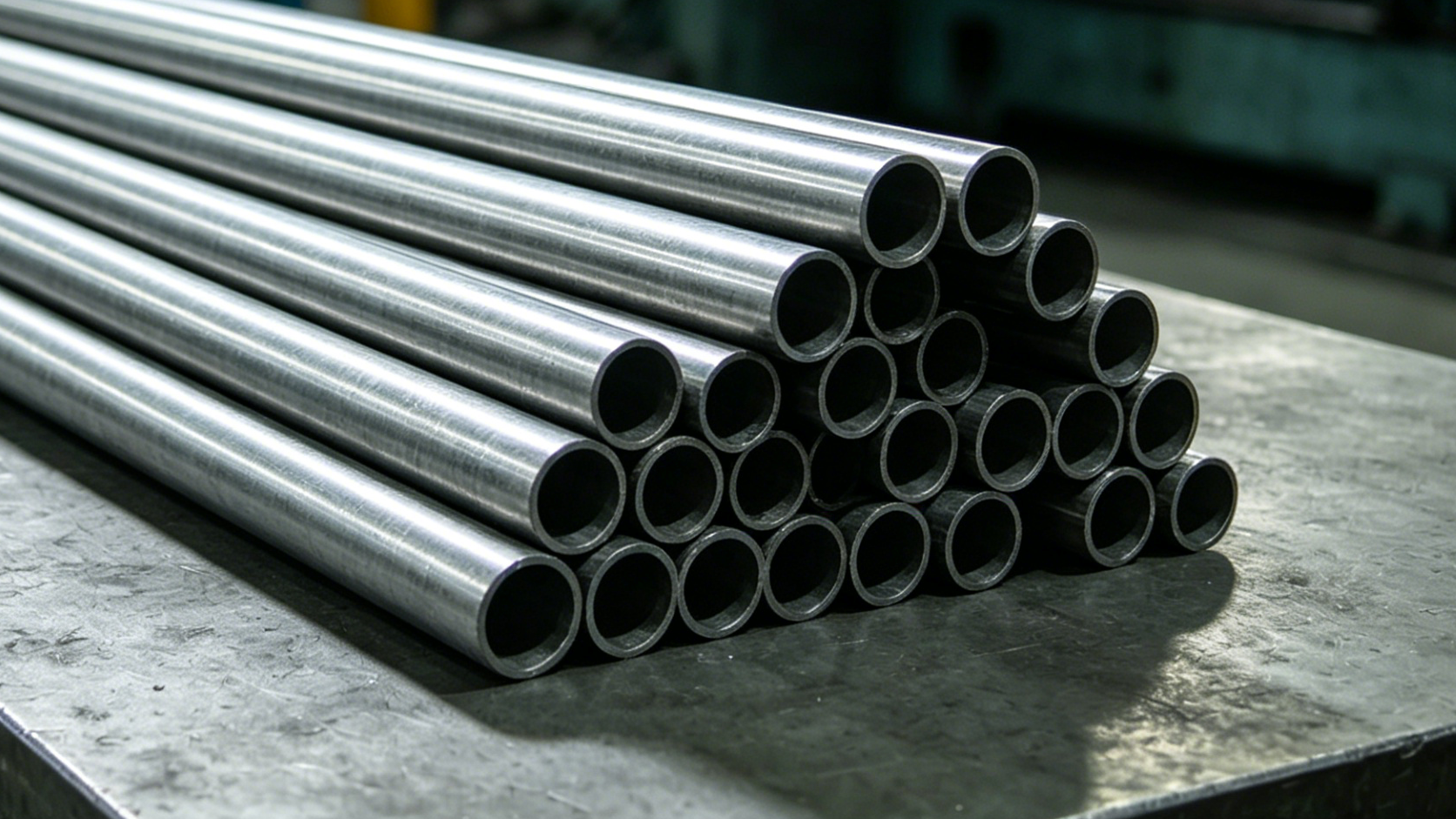
How to Choose a precision steel pipe manufacturer
A qualified manufacturer combines mature process control with strict inspection. Look first for evidence of dimensional consistency: tight outside-diameter and wall-thickness tolerance, uniform wall, a clean surface and stable performance from batch to batch. These factors reduce the risk of wear, oil leakage and unexpected failure in service. Reliable suppliers also use controlled raw materials and standardized production, so the tube better resists pressure and abrasion and lowers the cost of later maintenance and replacement. Beyond the product itself, assess whether the manufacturer can deliver stable supply, non-standard customization, technical support and after-sales service. A low price from an unregulated small workshop may look economical, but inconsistent accuracy, substandard material and no after-sales cover usually make the total cost higher. The right question is not "who is cheapest" but "who can keep quality stable over repeated orders."
Precision Tube Quality Standards Buyers Should Check
Quality claims are only meaningful when tied to recognized standards and verifiable inspection. For cold-drawn and cold-rolled precision seamless tube, commonly referenced specifications include DIN 2391, EN 10305 and ASTM A519, alongside national standards such as GB/T 3639. When reviewing a supplier, ask which standard and edition the product is made to, and request the matching inspection records. Widely used quality-system certifications such as ISO 9001 indicate that a documented management system is in place, though the certificate alone does not prove every tube meets a given dimension or grade. The practical check is whether the supplier can show batch-level inspection data and a traceable production record, not just a brochure.
Why Dimensional Tolerance Matters in Precision Pipe
Tolerance is what separates a precision tube from an ordinary one. Outside-diameter and wall-thickness accuracy determine whether a tube fits and seals correctly without secondary machining. Wall uniformity affects how the tube behaves under pressure and bending, while straightness influences assembly and long stroke applications. When defining a purchase specification, state the required tolerance class, the measuring method and the sampling rule, then compare supplier data against that same basis. Be cautious of tolerance figures quoted without a standard, size range or measurement condition, because the number has little meaning without those boundaries.
How Cold Drawing Improves Precision Pipe
Cold drawing is a key process in precision tube production. The process pulls a hot-rolled mother tube through a die at room temperature, reducing size and improving both accuracy and surface finish in successive passes. Intermediate annealing is used to relieve work hardening and restore ductility so the tube can be drawn further without cracking. Compared with hot rolling alone, cold drawing delivers tighter dimensional control, a smoother surface and more consistent mechanical properties. Buyers should understand the process route a supplier uses, because it explains the tolerance and surface quality the product can realistically hold.
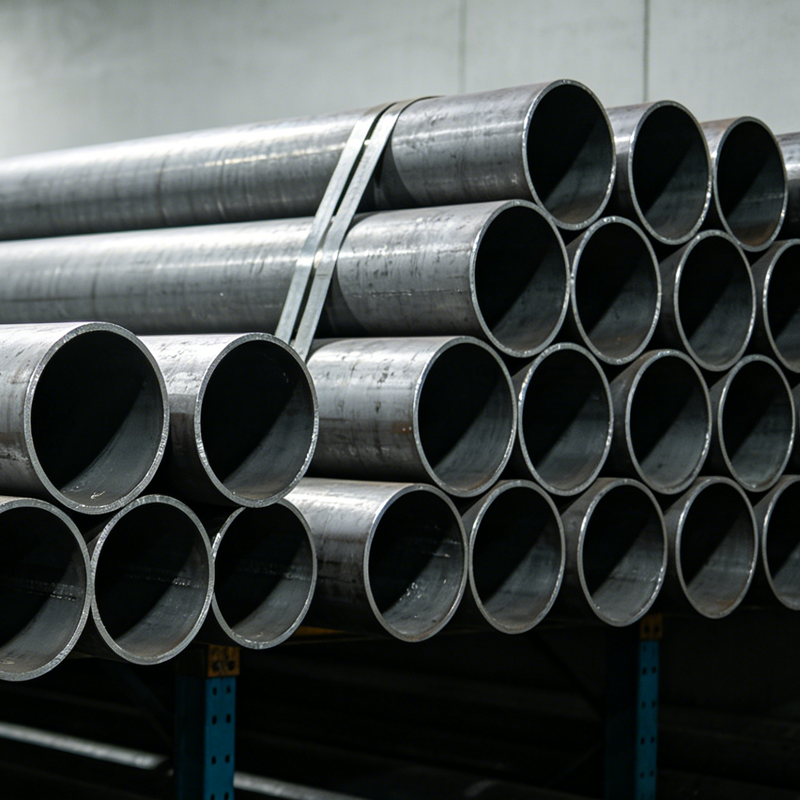
Custom Precision Pipe and Non-Standard Sizes
Standard catalog sizes do not fit every assembly. Custom precision pipe covers non-standard diameters, special wall thicknesses, tight length tolerances and application-specific materials. A capable supplier works from drawings or samples, confirms the achievable tolerance before quoting, and keeps the specification consistent from sample to mass production. When requesting a custom tube, provide the exact grade, dimensions, tolerance, surface condition and heat-treatment state. Clear input up front prevents first-article rejection and delivery delays, and lets the manufacturer confirm which process route will meet the requirement economically.
Precision Pipe for Hydraulic Cylinders
Hydraulic cylinders and similar systems place demanding requirements on tube: consistent inner diameter, good straightness, a smooth sealing surface and reliable pressure behaviour. Precision pipe for hydraulic cylinders is often cold-drawn or honed to reach the required surface finish and dimensional accuracy, because the tube directly affects sealing, friction and service life. If leakage or premature seal wear is a concern, discuss the inner-surface finish and the inspection method with the supplier rather than focusing only on the nominal size. Matching the tube condition to the cylinder duty is more effective than simply specifying a thicker wall.
The Role of Surface Finish in Precision Tube
Surface finish influences sealing, fatigue behaviour, corrosion resistance and appearance. Depending on the application, a precision tube may be delivered bright, pickled, polished or annealed, and the required roughness should be stated in the specification. A smoother surface helps seals last longer and reduces friction in moving assemblies, while an appropriate finish also supports later plating or coating. Ask the supplier how surface roughness is measured and which finish corresponds to your application, rather than relying on visual impressions, which vary between batches and observers.
ISO 9001 and Precision Tube Supplier Qualification
For an international buyer, supplier qualification is a structured comparison of evidence. An ISO 9001 precision tube supplier has a certified quality-management system, but qualification should go further: confirm the certification scope and validity, review the available inspection equipment, and check whether material certificates, dimensional reports and non-destructive testing can be provided for the delivered batch. Export experience and application cases are also useful signals, because they show the supplier has met comparable requirements before. Combining system certification with batch-level evidence is the most reliable way to judge whether a manufacturer can support a long-term supply relationship.
Choosing a precision steel pipe manufacturer comes down to matching verified capability with the real duty of the part. Define the application, specify the standard and tolerance, verify inspection and traceability, then compare total risk rather than unit price. A supplier that meets those conditions protects both the equipment and the production schedule.
Share to:


