Custom Special-Shaped Steel Tube: A Buyer Guide to Profiles, Processes and Applications
Special section steel pipe offers strength, weight savings and design freedom that round tube cannot match. This guide explains custom profiles, cold drawing, applications, hexagonal, square, rectangular, PTO shaft and oval tube, plus how shaped pipe is manufactured.
2026/11/26
Reading volume: 0
News Details
In the evolving landscape of industrial and construction materials, special-shaped steel pipes have emerged as increasingly significant options. As a category that transcends traditional circular cross-sections, special-shaped tubes integrate diverse geometric profiles, robust mechanical performance, and versatile application possibilities. For international buyers facing tighter spatial constraints and higher structural performance requirements, comprehending the capabilities of these profiles and how to specify them is key to maximizing their value.
What is a Custom Shaped Steel Pipe
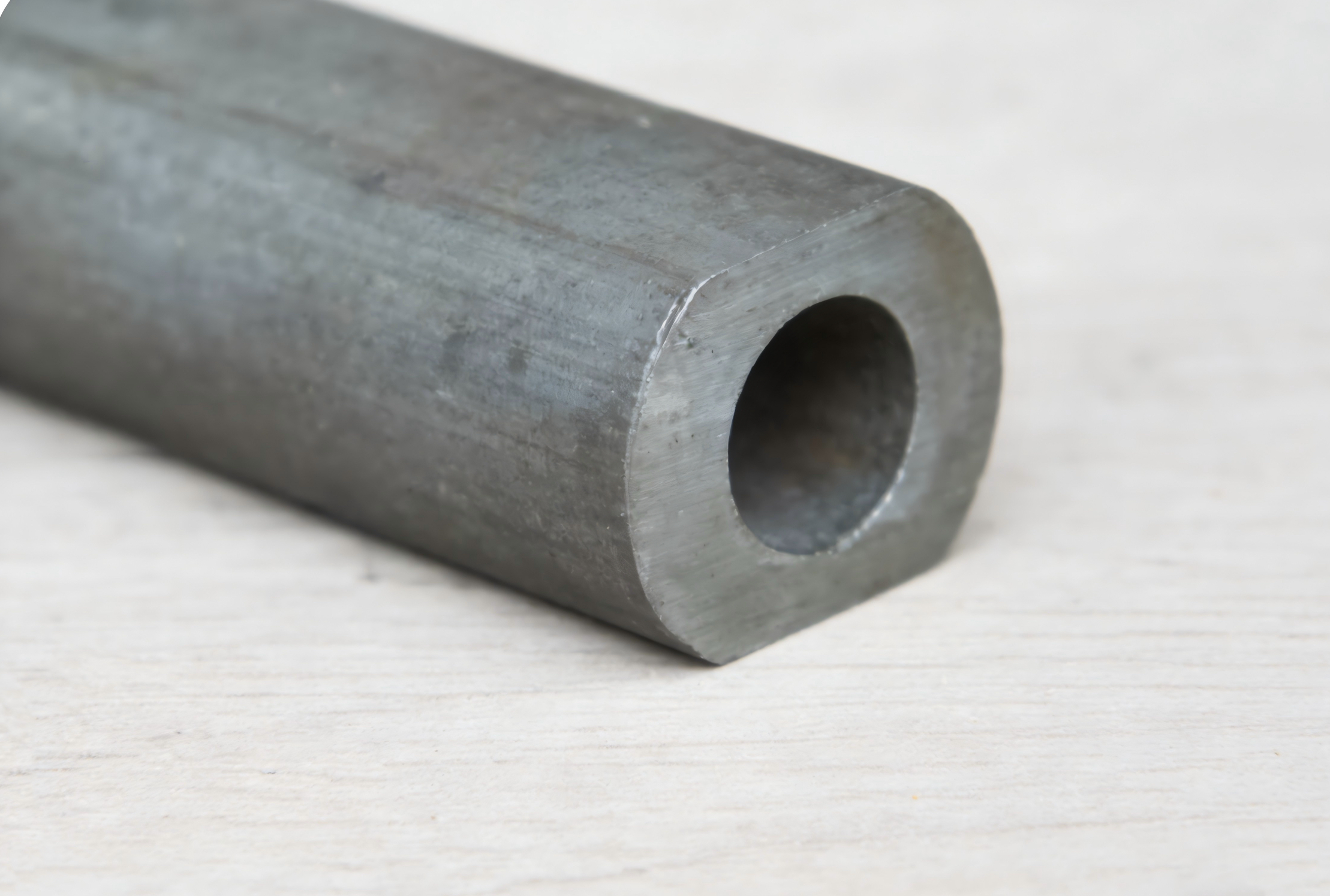
A custom shaped steel pipe refers to any tubular product with a non-circular cross-section. Common geometries include oval, triangular, square, rectangular, hexagonal, octagonal, semi-circular, as well as specialized profiles like plum blossom, peanut-shaped, and corrugated forms. The advantage of departing from circular geometry lies in its structural performance: under identical weight, shaped sections exhibit higher moment of inertia and section modulus, delivering superior resistance to bending and torsion. This enables lighter structures and reduced steel consumption while affording designers greater flexibility. Based on material composition, the primary categories include seamless steel shaped tubes, aluminum shaped tubes, and plastic shaped tubes, each tailored to distinct environmental conditions and performance requirements.
Why Choose Cold Drawn Special-Shaped Pipe
The manufacturing process dictates the precision, surface quality, and cost of shaped tubes. Cold drawing represents the precision-oriented approach: a round mother tube is pulled through forming dies at room temperature, with the final profile achieved through successive passes using progressively smaller dies. The outcome is exceptional dimensional accuracy, a smooth surface finish, and consistent mechanical properties. Special-shaped tubes produced via cold drawing find widespread application in machinery and precision structures where dimensional fit and straightness are critical. When precision is paramount, buyers should verify the production process and inquire about intermediate annealing, as each cold deformation step induces work hardening that must be relieved to prevent cracking.
Applications of Special Shaped Steel Pipe
Special-shaped pipe applications span nearly every industrial and construction sector, with their core advantage lying in the ability to deliver tailored material solutions. In building and architectural projects, stainless steel shaped sections are selected for handrails, guardrails, and curtain wall structures where both aesthetics and structural strength are essential. In machinery, shaped sections with enhanced bending and torsional resistance are utilized in hydraulic supports and structural components of construction equipment. Since the cross-section can be engineered to accommodate specific loads and spatial constraints, shaped tubes often replace assemblies of simpler components, reducing welding and assembly operations.
Hexagonal Steel Tube for Torque and Fit
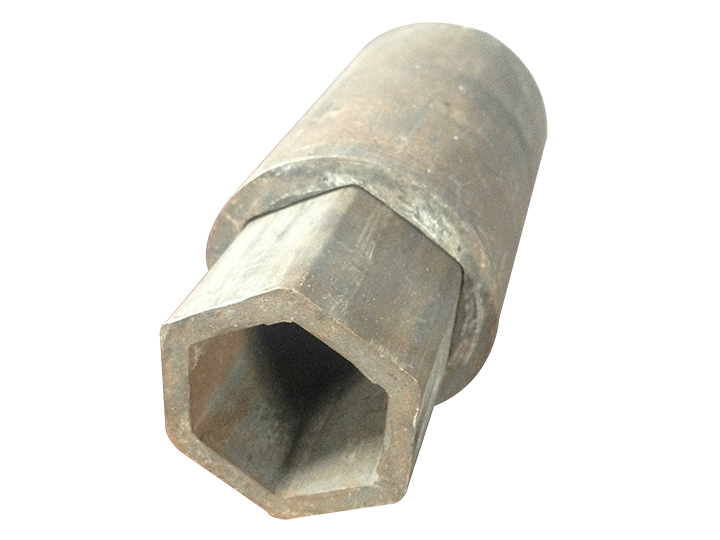
A hexagonal steel tube is frequently employed where torque transmission or a wrench-compatible profile is required. The hexagonal external contour enables gripping or driving of components without the need for separately machined flat surfaces, making it common in mechanical connections and transmission parts. Variants such as outer hexagonal/inner round and outer round/inner hexagonal profiles combine external driving geometry with internal bores for fluid passage or mating shafts. When specifying hexagonal tubes, ensure confirmation of the across-flats dimension, corner radius, and tolerance, as these parameters directly influence the fit with mating components.
Square and Rectangular Steel Tube in Structures
Square and rectangular steel tubes are the most widely utilized shaped sections in structural and framing applications. Their flat faces facilitate welding, bolting, and connection to panels, while the closed section provides predictable bending and compressive performance. Square profiles are suitable for balanced loading conditions, whereas rectangular profiles are preferred where directional load requirements or specific mounting surfaces are necessary. For buyers, critical quality checks include wall thickness uniformity, corner consistency, and straightness, as these factors impact both the appearance of the finished structure and assembly accuracy.
PTO Drive Shaft Tube for Agricultural Equipment
PTO drive shaft tubes constitute a specialized category used in agricultural power transmission, where profiles must reliably transmit torque under varying load conditions. Non-circular sections such as triangular, lemon-shaped, and star profiles are common because their geometry enhances torque transfer and integration within shaft assemblies. These tubes are typically manufactured with tight dimensional control to ensure compatibility with mating yokes and telescopic components. When sourcing PTO tubes, specify the exact profile, material grade, wall thickness, and length tolerance, and confirm that suppliers can maintain consistent geometry along the entire length, not just at sample ends.
How Special-Shaped Pipe Is Manufactured
The special-shaped pipe manufacturing process generally commences with a round seamless or welded mother tube, which is then formed into the desired profile through cold drawing, cold rolling, roll forming, or hot extrusion. Cold drawing and cold rolling are suited for precision applications and smaller batch production; roll forming and welding offer economical solutions for high-volume production of standard shapes; hot extrusion accommodates large, thick-walled sections but with looser tolerances and rougher surface finishes. Die design, lubrication, and intermediate heat treatment are critical factors determining whether complex profiles can be produced to required accuracy. Early discussion of these steps with suppliers helps avoid committing to shapes that cannot be economically manufactured to specified tolerances.
Oval Steel Tube for Flow and Tight Spaces
Oval steel tubes are valued for two primary reasons: they fit into narrow installation spaces and offer reduced flow resistance compared to equivalent circular tubes in certain fluid applications. The flattened profile minimizes bending radius requirements in compact machinery and is commonly used in exhaust systems, fluid pipelines, furniture, and rail systems. As with other shaped sections, key specifications include the major and minor axes, wall thickness, and corner radii. Verifying these dimensions against actual installation envelopes prevents costly rework during assembly.
Special-shaped steel pipes are not commodity products; they represent engineered solutions. By aligning cross-section geometry, material selection, and manufacturing processes with actual load requirements and spatial constraints, buyers can achieve weight reduction, streamlined assembly, and enhanced performance. Clearly defining geometric specifications and tolerances, while verifying supplier forming capabilities, ensures that shaped tubes deliver value beyond what standard circular sections can provide.
Share to:


