EN 10305-1 Precision Tubes: A Buyer’s Guide to Grades and Delivery Conditions
News Details
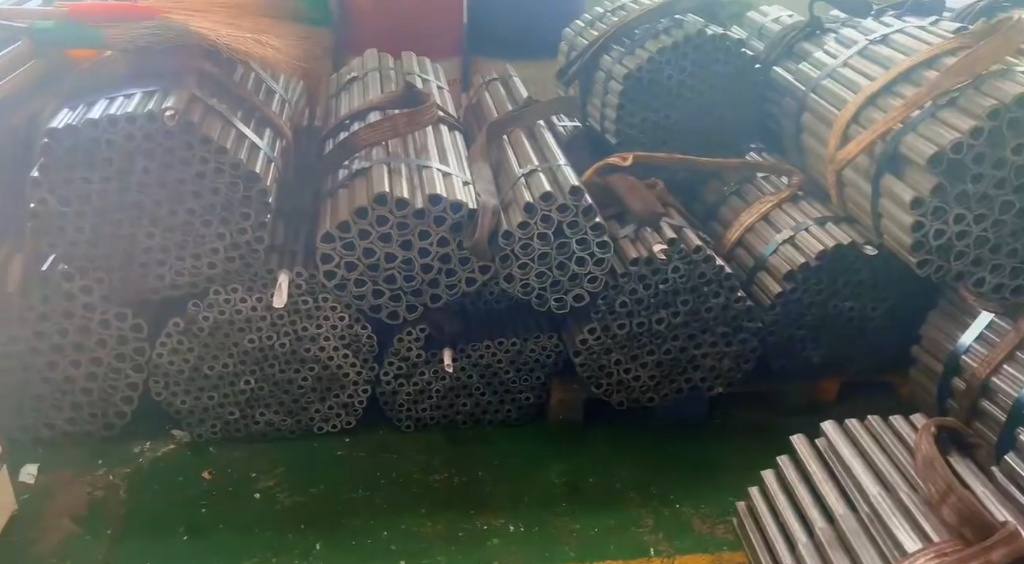
Seamless precision steel tubes play a vital role in high-stress industrial applications. When you need exact dimensions, smooth surface finishes, and predictable mechanical strength, the EN 10305-1 standard sets the baseline for quality. At FAKESI, we supply premium cold-drawn precision steel tubes that meet strict global standards, ensuring safety and reliability for complex engineering projects.
However, selecting the right tube is not just about choosing a outer diameter or wall thickness. To get the best performance at a reasonable cost, you must also pick the correct steel grade and delivery condition. This guide walks you through the key aspects of EN 10305-1 to help you make informed procurement decisions.
Understanding the EN 10305-1 Standard
The European standard EN 10305-1 specifies technical delivery conditions for seamless cold-drawn steel tubes. These tubes are made for hydraulic systems, automotive components, shock absorbers, machine manufacturing, and structural parts where tight tolerances matter.
Unlike standard structural tubes, cold-drawn precision tubes undergo cold finishing processes after hot rolling. As a result, they deliver distinct benefits:
-
Tight dimensional tolerances on both inner and outer diameters
-
Superior surface quality with minimal defects
-
Higher tensile strength and yield strength due to cold working
-
Custom heat treatment options tailored to specific machining needs
When sourcing from FAKESI, buyers can count on high dimensional accuracy and clean surfaces that cut down on extra machining time.
Key Steel Grades: E235 vs E355
The EN 10305-1 standard includes several non-alloy quality steel grades. The two most widely used grades in heavy industry are E235 and E355.
E235Precision Steel Tube
The E235 precision steel tube is the standard choice for general mechanical engineering and hydraulic lines. The letter "E" signifies that it is an engineering steel, while "235" indicates its minimum yield strength in megapascals (MPa) in the annealed state.
-
Chemical Characteristics: Low carbon content makes it easy to weld, cold bend, and machine.
-
Key Features: Excellent ductility, cost efficiency, and reliable structural strength.
-
Typical Uses: Automotive steering parts, hydraulic cylinder lines, general bushings, and mechanical spacers.
If your design requires moderate loads combined with good formability and welding flexibility, E235 is often the most economic choice.
E355 Precision Steel Tube
When applications face higher pressure, heavier loads, or severe structural stress, the E355 precision steel tube is the preferred option. With a minimum yield strength of 355 MPa, it provides higher load-bearing capacity compared to E235.
-
Chemical Characteristics: Contains slightly higher carbon and manganese levels, boosting mechanical strength.
-
Key Features: High tensile strength, strong fatigue resistance, and good toughness.
-
Typical Uses: Heavy-duty hydraulic cylinders, crane arms, high-pressure lines, and drive shafts.
For projects where reducing component weight without sacrificing strength is essential, E355 allows engineers to use thinner wall thicknesses while maintaining safety margins.
Standard Delivery Conditions Explained
In addition to choosing the steel grade, you must specify the delivery condition. The delivery condition defines the final heat treatment or mechanical state of the tube. This directly impacts how the steel behaves during bending, machining, or welding.
Under EN 10305-1, delivery conditions are designated by capital letters (with older DIN 2391 equivalents still referenced in industry trade):
1. +C (Cold Finished / Hard - Old Code: BK)
Tubes do not undergo heat treatment after the final cold drawing pass. Therefore, they exhibit high yield strength and tensile strength, but low elongation.
-
Properties: High hardness, smooth finish, limited formability.
-
Best For: Straight parts that require minimal bending, such as sleeves and pins.
2. +LC (Cold Finished / Soft - Old Code: BKW)
Tubes receive a light final drawing pass after heat treatment. This offers moderate strength with slightly better ductility than +C.
-
Properties: High dimensional accuracy with light cold formability.
-
Best For: Components that need minor expanding or cold shaping.
3. +SR (Stress Relieved - Old Code: BKS)
After the cold drawing process, tubes are heat-treated in a controlled atmosphere to relieve internal stress without fully softening the material.
-
Properties: High yield point combined with reduced internal stress, lowering the risk of distortion during machining.
-
Best For: Hydraulic cylinders, honed tubes, and precision machined components.
4. +A (Annealed - Old Code: GBK)
Tubes are annealed in a controlled environment after cold working.
-
Properties: Soft structure, maximum ductility, lowered strength, and high elongation.
-
Best For: Severe cold bending, flaring, and heavy cold deformation.
5. +N (Normalized - Old Code: NBK)
Tubes are heated above the upper transformation point in a controlled atmosphere to refine the grain structure.
-
Properties: Uniform mechanical properties, high toughness, and stress-free structure suitable for critical welding.
-
Best For: Structural parts subject to shock loads, severe bending, and safety-critical welding.
Comparison of Delivery Conditions
| Delivery Condition | Symbol | Main Feature | Ideal Application |
| Cold Finished (Hard) | +C | Maximum strength & hardness | Straight shafts, rigid sleeves |
| Cold Finished (Soft) | +LC | High strength, light shaping | Slightly formed components |
| Stress Relieved | +SR | High strength, low stress | Hydraulic cylinders, honed tubes |
| Annealed | +A | Soft, maximum bending | Complex cold bending & flaring |
| Normalized | +N | Fine grain, balanced toughness | Welded frames, safety parts |
Technical Specifications and Quality Control
When buying EN 10305-1 precision tube products, specifying technical requirements clearly prevents costly downtime. FAKESI recommends reviewing these key factors before placing an order:
-
Dimensional Accuracy: Confirm exact outer diameter (OD), inner diameter (ID), and wall thickness (WT) tolerances based on your assembly needs.
-
Surface Roughness: For hydraulic or pneumatic applications, verify surface finish standards to protect internal seals.
-
Straightness: Ensure straightness values meet your machining requirements, especially for long shafts or high-speed rotating parts.
-
Testing & Inspection: Request Mill Test Certificates (EN 10204 3.1) covering chemical analysis, tensile testing, yield strength, elongation, and non-destructive eddy current testing.
Why Choose FAKESIas Your Supply Partner
FAKESI supplies high-grade EN 10305-1 precision tube solutions tailored to global industrial standards. By matching the right steel grade—such as E235 or E355—with the proper delivery condition, we help you lower processing costs, improve product lifespan, and guarantee safe field operation.
Contact the technical sales team at FAKESI today to discuss your project requirements, request custom quotes, or review detailed material specification sheets.


