PTO Tube Dimensions and Series Compatibility
News Details
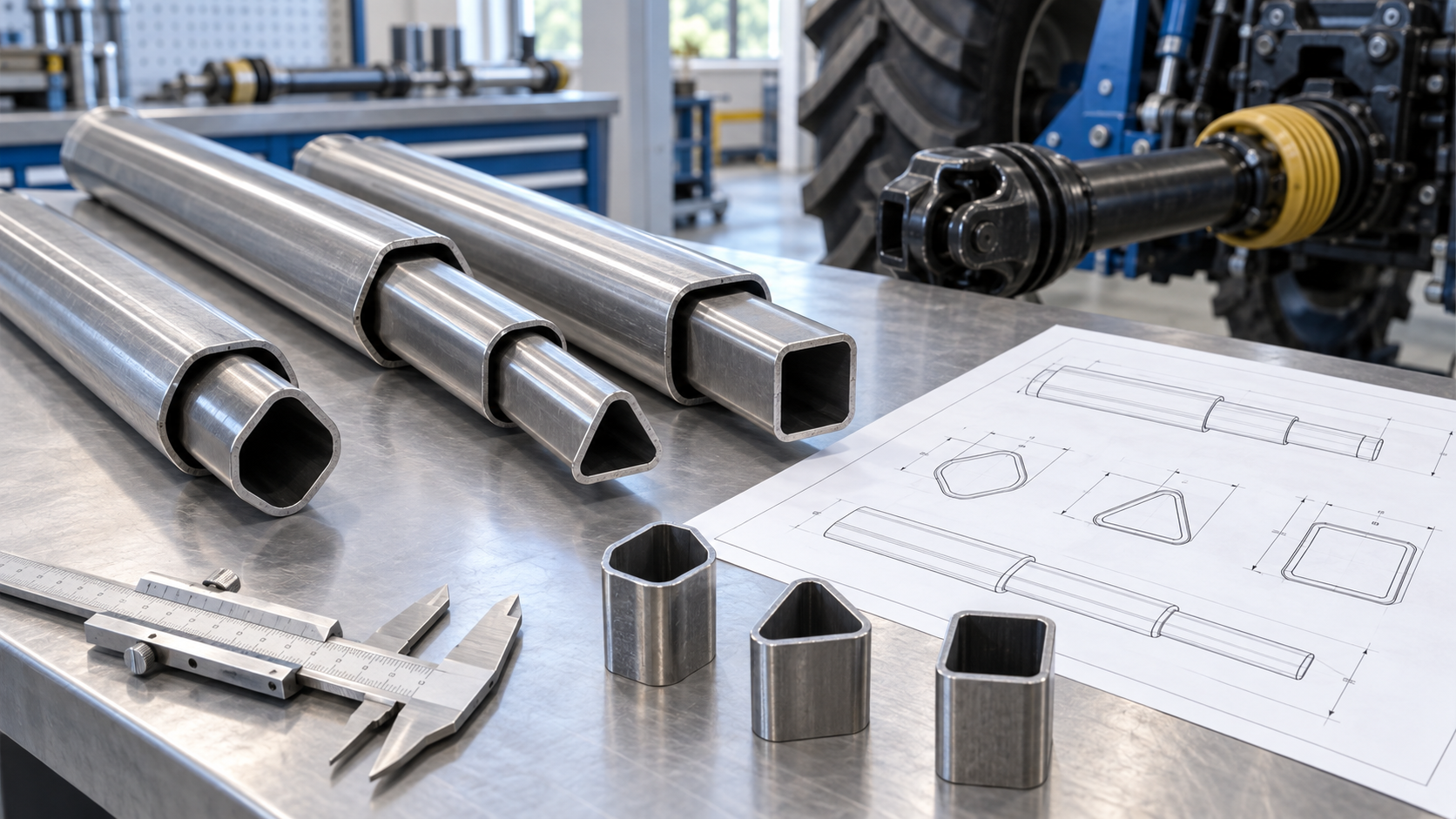
What Buyers Need to Verify Before Ordering
PTO tubes are key parts in agricultural drive shafts. They transfer torque, allow telescopic movement, and help the shaft work safely under changing field conditions. However, many buying problems start with one small mistake: the tube looks similar, but the dimensions or series do not match.
For B2B buyers, checking PTO shaft tube dimensions is not only about length or wall thickness. You also need to confirm the tube profile, inner and outer fit, tolerance, material, and shaft series. This helps avoid poor sliding, vibration, fast wear, or assembly failure.
FAKESI supplies precision steel tubes, seamless steel tubes, PTO drive shaft tubes, and special-shaped steel pipes for machinery applications. Therefore, buyers can discuss both standard and custom tube requirements before production.
Confirm the PTO Shaft Series
The first step is to identify the PTO shaft series. Each series may have its own tube size, profile shape, yoke design, and torque range. Even when two tubes look close, they may not fit the same shaft.
Buyers should confirm:
PTO shaft series or model number
Tube profile type, such as triangle, lemon, star, square, or other shape
Matching yoke and universal joint size
Rated torque and working speed
Required telescopic travel
Replacement or new production use
PTO shaft series tube sizes should always be checked with drawings, samples, or accurate measurements. A series name alone may not be enough, because different suppliers may use different tooling standards.
Check Inner and Outer Tube Fit
Most PTO shafts use one tube sliding inside another. So, the inner outer PTO tube match is very important. If the clearance is too tight, the shaft may jam. If the clearance is too loose, it may shake, wear fast, or make noise.
Key points to verify include:
Outer tube profile width and height
Inner tube profile width and height
Wall thickness
Corner radius
Straightness
Tube length
Surface finish
Sliding clearance
Anti-rust oil or coating thickness
The tube should slide smoothly but still transfer torque firmly. In addition, the inner and outer profiles must make enough contact under load. This is especially important for heavy-duty farm equipment.
Measure More Than the Basic Size
A common mistake is checking only outside width and length. In real use, several details affect fit and service life.
Buyers should ask for actual measured data for:
Profile shape
Wall thickness tolerance
Corner and edge form
Ovality or profile deformation
Cut length tolerance
Surface roughness
Straightness per meter
For special-shaped PTO tubes, corner shape can be just as important as width. A small change in radius may affect how the tube slides into the matching part. Therefore, drawings should include both main dimensions and tolerance requirements.
Match Material to the Working Load
PTO tubes work under torque, impact, dust, and outdoor conditions. As a result, the material must match the machine’s duty level.
When choosing material, buyers should consider:
Machine type
Load level
Shock load frequency
Working speed
Tube length
Required strength
Welding or heat treatment needs
Corrosion protection
For light-duty equipment, a standard carbon steel tube may be suitable. For higher torque or harsher use, buyers may need stronger material or tighter dimensional control. FAKESI can support discussions based on application, drawing, and sample requirements.
Verify Production Process and Tolerance
The production process affects the final tube quality. Precision tubes and special-shaped tubes often need stable forming, drawing, straightening, cutting, and inspection.
Before ordering, buyers should confirm:
Production method
Available profile tooling
Minimum and maximum size range
Tolerance control method
Inspection equipment
Sample approval process
Packing method
This step is useful when buying custom PTO shaft tube dimensions. It also helps buyers compare suppliers based on real capability, not only price.
Test Samples Before Bulk Production
A sample test is one of the safest ways to reduce risk. Even with clear drawings, the actual tube should be checked in the shaft assembly.
Sample testing should include:
Dimension inspection
Inner and outer tube sliding test
Yoke assembly test
Torque fit check
Surface check
Straightness check
Anti-rust condition check
If the order is for replacement parts, compare the sample with the original tube. However, if the old tube is worn, do not copy the worn size directly. Use the original drawing or a new measured standard where possible.
Prepare a Clear RFQ
A complete RFQ helps the supplier quote faster and more accurately. It also reduces the chance of receiving the wrong product.
When asking FAKESI for PTO tube pricing, include:
Tube drawing
PTO shaft series
Inner and outer tube information
Material grade
Profile size
Wall thickness
Length
Tolerance
Surface treatment
Quantity
Sample need
Packing requirement
Application details
Photos are helpful, but they should not replace technical data. If no drawing is available, sending a physical sample is often the best option.
Final Checklist for Buyers
Before confirming a PTO tube order, verify the following:
PTO shaft series
Tube profile shape
Inner and outer tube match
Actual PTO shaft tube dimensions
Wall thickness and tolerance
Material grade
Torque and application needs
Sliding performance
Yoke compatibility
Sample approval
Surface protection and packing
By checking these points early, buyers can reduce fit problems, avoid delays, and improve the reliability of the final PTO shaft. For standard or custom PTO drive shaft tubes,FAKESI can help review drawings, samples, and application needs before production.


