What Are the Types of Steel Pipe? A Complete Guide
News Details
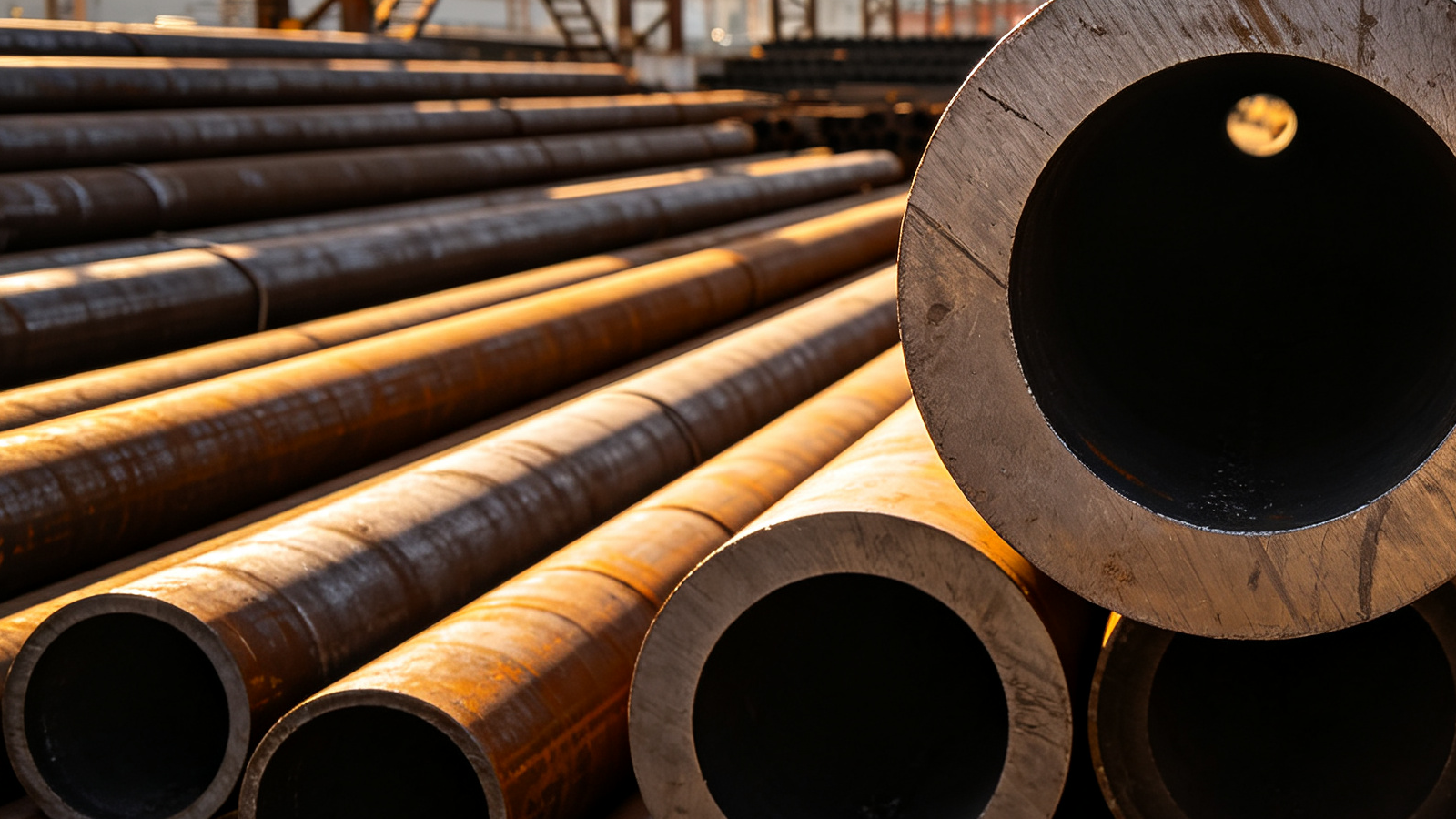
Steel pipes are the backbone of modern industry. From massive oil pipelines to small automotive parts, these components keep our world moving. However, if you are sourcing materials for a project, you might feel overwhelmed by the options.
So, what are the types of steel pipe, and how do you choose the right one?
In this guide, we will break down the main categories of steel pipes in plain language. We will look at how they are made, what they are used for, and why certain industries require specialized options like precision tubing.
The Primary Types of Steel Pipe
To understand steel pipes, it helps to look at how factories manufacture them. Generally, we divide steel pipes into two main categories: welded pipes and seamless pipes.
1. Welded Steel Pipes
Factories make welded pipes by taking a flat strip or sheet of steel, rolling it into a tube shape, and welding the seam. Because this process is highly efficient, welded pipes are usually more cost-effective. They work beautifully for transporting water, gas, and structural scaffolding where extreme pressure is not a factor.
2. Seamless Steel Pipes
As the name suggests, seamless pipes have no welded seams. Factories create them by piercing a solid steel billet with a mandrel to form a hollow tube. Because there is no weld line, these pipes are incredibly strong and can handle intense pressure, high temperatures, and heavy mechanical stress. You will often find them in oil rigs, chemical plants, and high-pressure boilers.
What Is Precision Pipe?
Standard steel pipes are great for moving fluids, but some industries need something much more exact. This brings us to a vital question: What is precision pipe?
A precision pipe is a specialized steel tube manufactured with incredibly tight dimensional tolerances. This means the outer diameter, inner diameter, and wall thickness are almost perfectly exact. Furthermore, these pipes feature an ultra-smooth surface finish inside and out.
Unlike standard structural pipes, a precision pipe does not need extra machining or polishing before you use it. Because of this accuracy, they are essential for complex machinery, hydraulic systems, and automotive parts.
Exploring Types of Precision Steel Pipes
When accuracy is your top priority, you will generally choose between two high-performance categories. Both offer excellent reliability but serve different structural needs.
1. Precision Seamless Pipe
A Precision Seamless Pipe combines the raw strength of a seamless tube with the exact dimensions of precision engineering.
To achieve this, manufacturers take a standard seamless pipe and pass it through additional finishing processes. The result is a highly reliable tube that can withstand immense pressure while fitting perfectly into complex mechanical assemblies. These are widely used in high-end hydraulic cylinders and fuel injection systems.
2. Cold Drawn Seamless Steel Pipes for Precision Engineering
To get the absolute highest level of accuracy, manufacturers rely on cold drawing. Cold drawn seamless steel pipes for precision engineering are pulled through a die at room temperature.
This cold working process does two things:
-
It forces the steel into incredibly precise dimensions.
-
It changes the grain structure of the metal, making the pipe significantly stronger.
For industries like aerospace, automotive manufacturing, and heavy equipment lines, these pipes offer the perfect balance of tight tolerances and high structural integrity.
The Role of Custom Manufacturing: OEM Pipe Weld Precision Steel
While seamless options are excellent for high pressure, welded precision pipes are ideal for specialized shapes and cost-efficiency. This is where oem pipe weld precision steel services come into play.
Original Equipment Manufacturers (OEMs) often require custom sizes, unique steel grades, or specific weld strengths for their product lines. By using advanced welding techniques followed by precise sizing steps, manufacturers can create highly accurate welded tubes that meet exact client blueprints. These custom tubes are perfect for structural frames, exhaust systems, and precision mechanical parts where consistency across thousands of units is required.
Summary: Choosing the Right Pipe
Selecting the correct steel pipe depends entirely on your application:
-
Choose standard welded pipes for low-pressure fluid transport and general structural use.
-
Choose standard seamless pipes for high-pressure oil, gas, and chemical lines.
-
Choose precision pipes (whether seamless or cold-drawn) when your project demands exact measurements, smooth surfaces, and zero room for error.
For high-quality manufacturing standards and a deeper look at industrial steel pipe configurations, sourcing teams can reference specialized production insights via professional suppliers like Jiangbo Metallurgy. Matching your exact engineering tolerances to the right fabrication method ensures your project stays durable, safe, and cost-efficient.


