Is Round or Square Steel Tubing Stronger?
News Details
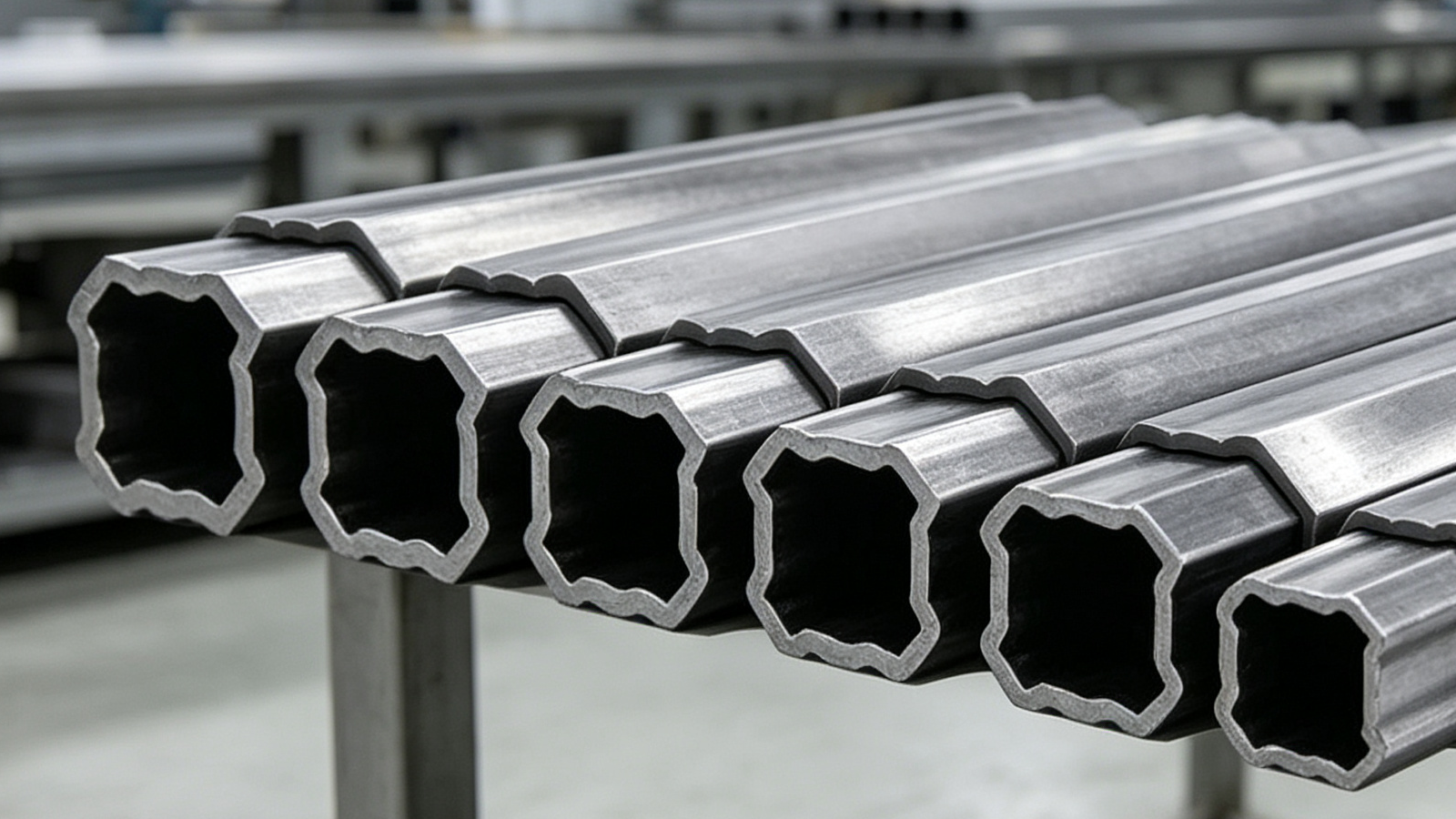
When choosing structural materials for building frames, industrial equipment, or heavy machinery, project managers often face a common question: Is round or square steel tubing stronger?
The short answer is that neither shape is always stronger than the other. Instead, strength depends entirely on how the load is applied to the tube. Round tubing handles twisting forces and internal pressure best. On the other hand, square tubing offers greater resistance to bending along flat axes.
This guide explains the structural differences between round and square tubing, explores high-performance seamless options, and helps you select the right profile for your project.
Bending Strength: Why Square Tubing Wins on Flat Axes
When a load pushes down directly on a beam, the shape of the cross-section dictates how well it resists bending.
Square tubing concentrates material further away from its central axis. Because of this geometry, a square tube has a higher moment of inertia than a round tube of the same weight and wall thickness. As a result, square tubing bends less when loaded horizontally or vertically.
Furthermore, the flat sides of a square tube make it much easier to weld, bolt, and join to other flat structural elements. For building frames, trailers, and solar mounting racks, square profiles deliver high structural stiffness and simple assembly.
Torsional and Pressure Strength: Why Round Tubing Wins in All Directions
Although square tubing excels at resisting straight-line bending, round tubing performs far better under twisting (torsional) loads and high internal pressures.
Because a round tube is completely symmetrical around its center, it distributes stress evenly across 360 degrees. Consequently, it has no weak corners or stress concentration points.
-
Twisting Forces: Drive shafts, roll cages, and crane arms frequently use round tubing because it resists twisting from any angle.
-
Internal Fluid Pressure: Pipelines and hydraulic systems rely on round pipes because round walls handle outward radial pressure without expanding or deforming.
Why Choose a Seamless Square Steel Pipe for Heavy Loads?
In high-stress structural applications, engineers often prefer a seamless square steel pipe over a standard welded tube.
Standard square tubes start as flat steel sheets that are rolled and welded along a seam. Although welded tubes are cost-effective for light frameworks, the weld seam creates a potential point of structural failure under extreme loads or vibrations.
In contrast, a square seamless tube is formed from a solid round steel billet. Manufacturers cold-draw or extrude the solid steel into a seamless round pipe before shaping it into a square profile. Because it lacks a welded seam, a seamless steel square tube offers key benefits:
-
Uniform Strength: Stress distributes evenly across all four walls and corners without weak spots.
-
Higher Load Capacity: Handles heavier dynamic loads, impacts, and thermal expansion cycles.
-
Clean Visuals: Delivers smooth exterior surfaces ideal for exposed architectural frameworks.
Material Spotlights: What Is Seamless Stainless Steel Pipe?
Beyond standard carbon steel, demanding environments require specialized corrosion-resistant alloys. Buyers often ask: what is seamless stainless steel pipe, and how does it improve structural longevity?
A seamless stainless steel pipe is a solid alloy tube extruded without any longitudinal welds, made from corrosion-resistant grades like 304, 316L, or duplex stainless steel. By combining the natural rust resistance of chromium-nickel alloys with seamless construction, these pipes withstand harsh chemicals, marine environments, and high operating temperatures.
When shaped into square or round profiles, seamless stainless steel tubing provides long-lasting structural support for chemical processing plants, food processing facilities, and coastal infrastructure projects.
How to Choose the Right Tubing Profile for Your Project
To choose the right steel tubing for your application, evaluate the main forces your structure will experience:
| Load Type | Best Tubing Shape | Primary Advantage |
| Straight Bending (Vertical/Horizontal) | Square Tubing | Higher moment of inertia on flat sides |
| Twisting (Torsional Force) | Round Tubing | Uniform 360-degree stress distribution |
| High Internal Pressure | Round Tubing | Smooth radial stress distribution |
| Flat Joint Assembly & Fabrication | Square Tubing | Easy flush mounting and welding |
| Heavy Dynamic Loads & Vibration | Seamless Tubing | No weak weld seams to fail under fatigue |
By matching the tube geometry to your specific engineering requirements, you maximize structural safety while keeping material weight and costs under control.
High-Quality Steel Tubing Solutions from FAKESI
Sourcing reliable steel tubing requires a trusted manufacturing partner. FAKESI Special Steel specializes in producing and distributing high-performance seamless steel pipes, structural square tubes, and alloy piping solutions for global industrial markets.
With extensive inventory and advanced cold-drawing facilities, Wuxi Jiangbo supplies high-strength carbon steel and stainless steel tubing tailored to strict international standards. Whether your project requires heavy-wall round pipes for energy infrastructure or high-precision square seamless tubes for machinery frames, Wuxi Jiangbo provides dependable quality, precise dimensions, and fast global delivery.
If you are searching for a reliable square steel pipe near me or need direct factory sourcing for bulk industrial projects, working with an established exporter ensures fully certified materials and full engineering support.
Summary: Matching Tube Shape to Engineering Needs
In summary, neither round nor square steel tubing is strictly "stronger" in every scenario:
-
Square Tubing is stronger against straight-line bending and easier to build into flat frameworks.
-
Round Tubing is stronger against twisting forces and internal fluid pressure.
-
Seamless Construction ensures maximum reliability under heavy loads by eliminating weak weld seams.
By selecting the right shape and manufacturing process, you ensure your project stays safe, stable, and cost-effective for decades to come.


