EU Machinery Regulation 2023/1230: What PTO Component Suppliers Should Prepare
News Details
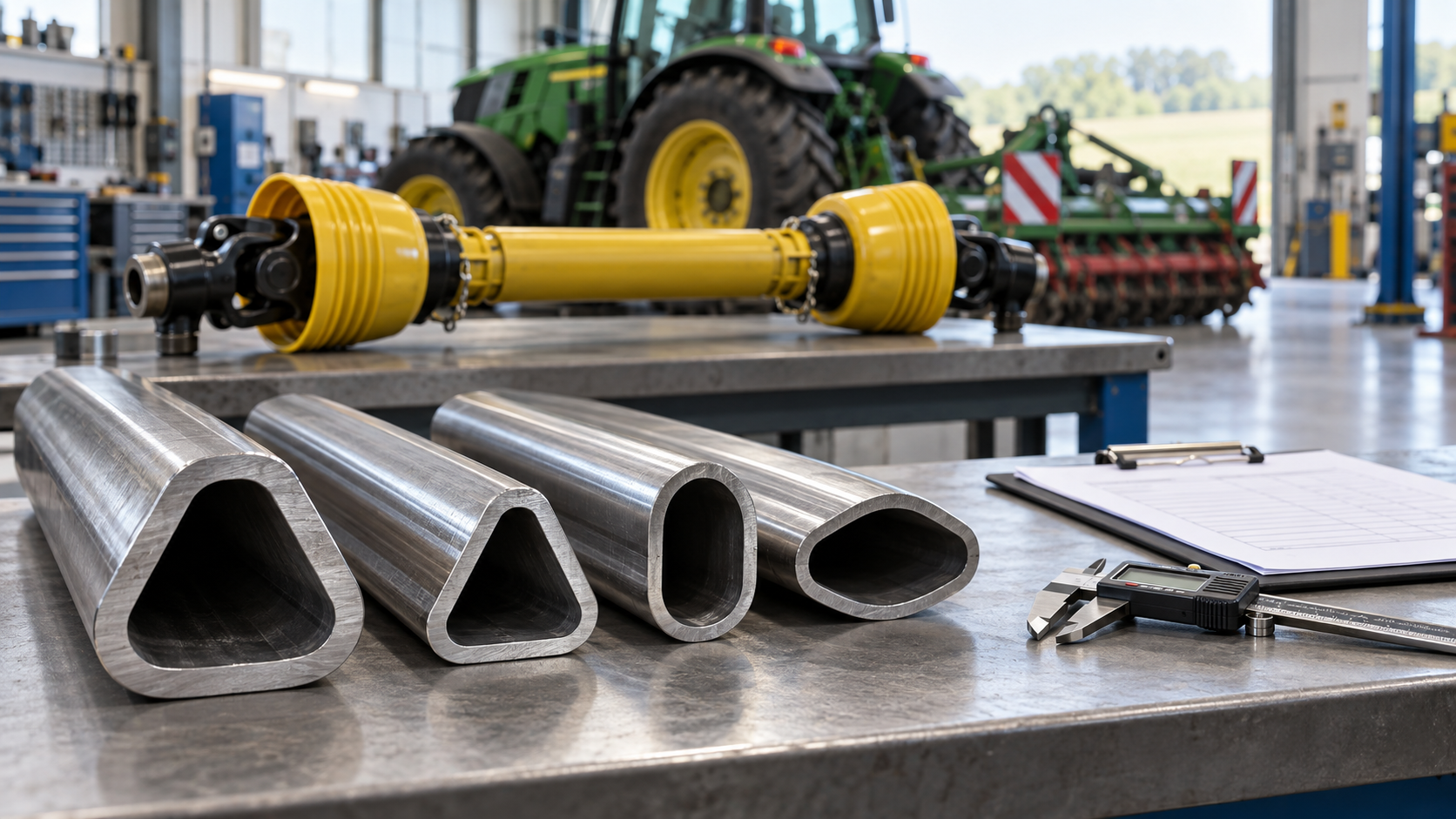
EU buyers need more than a PTO tube that matches a drawing. They also need clear material records, stable production quality, and evidence that supports the finished shaft’s safety assessment.
The EU machinery regulation, Regulation (EU) 2023/1230, applies from 20 January 2027, replacing Machinery Directive 2006/42/EC. The European Commission confirms that machinery placed on the EU market before that date must comply with the current Directive. Therefore, suppliers should plan around the market placement date, rather than the purchase order date alone.
For FAKESI and its customers, preparation starts with a clear distinction: supplying a steel tube is different from supplying a complete PTO transmission shaft or its guard.
Define What You Supply Under the Machinery Regulation
The Regulation covers removable mechanical transmission devices. Annex I, Part A lists these devices, including their guards, and separately lists guards for them. A bare steel profile tube is not automatically a complete transmission device or a safety component; classification depends on the product supplied and its function.
Before quoting, define the delivery scope:
- Tube blank: Profiled steel tube for further processing.
- Processed tube: Cut, drilled, or otherwise prepared to a drawing.
- Complete PTO shaft: An assembled transmission product.
- Guard: A protective product with its own safety role.
Next, agree who owns the finished design, validates the assembly, and prepares the relevant conformity documents.
For tube-only orders, focus on material and manufacturing evidence. Avoid describing a tube inspection report as proof of complete PTO shaft compliance.
Plan Early for Complete Shaft and Guard Assessment
For Annex I, Part A products, Article 25 requires one of three routes: EU type-examination followed by conformity to type, full quality assurance, or unit verification. Each involves a notified body; internal production control alone is not an option.
This affects the timing of component approval. A shaft manufacturer may need tube samples, inspection records, and design information before it can complete its assessment.
Therefore, suppliers should ask customers early:
- When must production samples be ready?
- Which tube features affect the assessed design?
- What evidence must accompany the samples?
- Which changes require customer approval?
Agreeing these points before tooling starts can reduce late revisions.
PTO Shaft Guard Requirements: Review the Whole Assembly
Annex III, section 3.4.7 requires protection along the full length of moving transmission parts between the tractor or self-propelled machine and the recipient machinery’s first fixed bearing. It also addresses protection at the tractor-side PTO connection.
For a tube supplier, the practical task is to support the customer’s guard and shaft design. The steel drive tube carries torque; it does not replace the protective guard.
During the design review, ask the assembly maker to confirm:
- The permitted operating length range.
- The required engagement of the inner and outer drive tubes.
- Clearance between rotating parts and the guard.
- Fit with guard bearings and other interfaces.
- Inspection needs after cutting or other processing.
Do not apply one minimum overlap value to every shaft. Use the approved design and validation plan for the specific assembly.
Also, distinguish drive-tube engagement from guard overlap. They serve different purposes and should appear separately in the design review.
PTO Tube Safety Standard: Specify the Exact Reference
A request for a “PTO tube safety standard” needs more detail. Material specifications, shaft safety requirements, and guard tests cover different parts of the product.
Two relevant references to review with the assembly manufacturer are:
| Reference | Main subject |
| EN 12965:2019+A1:2025 | Safety of agricultural and forestry PTO drive shafts and their guards |
| ISO 5674:2024 | Strength and wear tests and acceptance criteria for PTO drive-shaft guards |
These scopes are identified by BSI and ISO. Neither reference should be presented as a stand-alone material specification for a steel tube.
The Commission distinguishes mandatory safety requirements from voluntary harmonised standards. Before claiming a presumption of conformity, verify the exact standard edition and its applicable Official Journal citation. Do not assume that a published standard automatically has that status under the new Regulation.
In the purchase specification, list the material grade, dimensional requirements, agreed test methods, and relevant assembly standards separately.
Prepare a Clear PTO Tube Technical Pack
A useful supplier pack should let the customer connect each delivery to an approved drawing and production batch.
For FAKESI tube orders, buyers should agree on the following records before production:
1. Controlled drawings
Include the part number, drawing revision, profile shape, wall thickness, length, and critical tolerances. Identify the matching inner or outer tube where relevant.
2. Material information
Specify the steel grade, delivery condition, and agreed material certificate. Link the certificate to the supplied batch.
3. Dimensional inspection results
Define checks for profile size, wall thickness, straightness, twist, and cut length. Include paired-tube fit checks where the order requires them.
4. Test records
State the sample identity, test method, acceptance criteria, and results. Keep material tests separate from complete shaft performance tests.
5. Processing and delivery details
Record the agreed surface condition, corrosion protection, packaging, and any limits on further processing.
A material certificate supports material verification. It does not, by itself, establish a finished shaft’s torque rating or guard performance.
Validate Fit and Performance Before Bulk Orders
A tube can meet individual dimensions yet still need adjustment to work with its mating part. Therefore, sample approval should include the intended tube pair and relevant assembly steps.
A practical validation plan can cover:
- Sliding fit through the specified travel.
- Clearance and play between mating profiles.
- Condition after cutting, welding, or other processing.
- Performance under the customer’s defined loads.
- Fit within the selected guard system.
The shaft designer should set the operating conditions and acceptance limits. These may include speed, torque, shock loads, working angles, and service life.
Tube suppliers should provide evidence within their agreed scope. Meanwhile, the assembly manufacturer should validate the complete combination of tubes, joints, connections, and guards.
Keep an approved sample or reference record so future batches can be checked against the same requirements.
Control Changes and Keep Batches Traceable
Sample approval loses value if later production changes without review.
Agree a change-notification process for items such as:
- Steel grade or material source.
- Heat treatment or delivery condition.
- Profile tooling and critical dimensions.
- Production location or subcontracted operations.
- Surface treatment and inspection methods.
For each change, record what changed, which batches it affects, and whether new samples or tests are needed.
Also, connect batch labels, inspection reports, and delivery records. If a customer reports a fit issue, this link helps both sides identify the affected material and investigate the cause.
For repeat orders, confirm the drawing revision instead of relying only on an old purchase order description.
Prepare Your Next FAKESI PTO Tube RFQ
FAKESI’s product range includes triangular, lemon-shaped, and star-profile PTO tubes, alongside precision and special-shaped steel tubes. Buyers can review these options on the FAKESI website.
To prepare a useful quotation, send the profile drawing, mating-tube details, material requirements, expected order volume, and sample schedule. Include the customer’s inspection plan and documentation needs.
For projects linked to the EU machinery regulation, also identify the complete shaft manufacturer and its approval milestones. This helps align tube production with assembly testing and conformity assessment.
Contact FAKESI with your PTO tube requirements to discuss profile feasibility, sample preparation, and the records needed for your purchasing specification.


