Custom Special-Shaped Steel Tubes: From Cross-Section Drawing to Mass Production
News Details
Standard round steel tubes work well for basic piping and structural support. However, modern engineering projects often demand unique geometry to fit tight spaces, reduce weight, or improve strength. That is where custom shaped steel tubes come into play.
From oval and D-shape profiles to complex multi-sided channels, turning a custom design into a solid metal product takes clear planning. At FAKESI (Wuxi Jiangbo Intelligent Technology Co., Ltd.), we specialize in taking complex cross-section ideas and transforming them into finished, high-precision steel tubing.
In this guide, we walk you through the entire journey—from your initial cross-section drawing all the way to high-volume mass production.
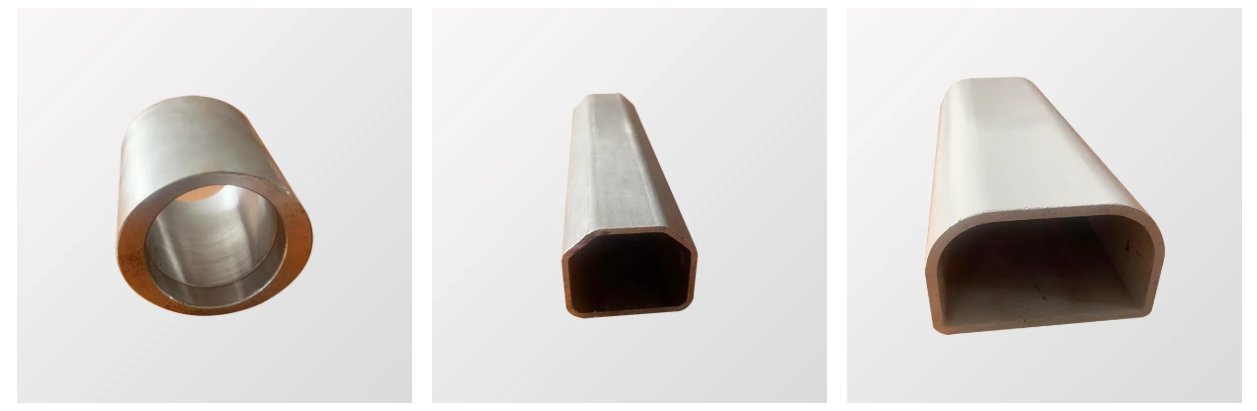
Step 1: Reviewing the Cross-Section Drawing
Every custom tubing project starts on the drafting board. When you submit a special shaped tube drawing, our engineering team reviews your design to evaluate its manufacturing feasibility.
During this initial stage, we examine several key parameters:
-
Profile Geometry: We check wall thickness, corner radii, and symmetry.
-
Dimensional Tolerances: We verify whether outer dimensions and wall thickness limits can be met during cold drawing.
-
Material Selection: We select the best carbon or alloy steel grade based on your required strength and ductility.
If a sharp internal corner or thin wall creates a risk of cracking, our team will suggest small drawing tweaks. Consequently, these minor adjustments ensure smooth forming while preserving your design intent.
Step 2: Tooling Design and Managing Tooling Costs
Once we finalize the drawing, the next critical phase is mold and die engineering. Producing a custom shaped steel tube requires specialized cold-drawing dies and inner mandrels.
Naturally, buyers often ask about the initial tooling cost. Here is how we help keep tooling expenses manageable and transparent:
Understanding Tooling Expenses
-
Custom Dies and Mandrels: Every unique shape needs dedicated tooling made from high-strength tungsten carbide or alloy steel.
-
Tooling Longevity: Well-designed dies last for thousands of meters of tubing production, which lowers your long-term cost per unit.
-
Cost Absorption: For large volume orders, FAKESI offers options to offset or refund the initial tooling fee once production milestones are met.
Investing in accurate tooling up front prevents dimensional drifting and surface defects later during mass production.
Step 3: Prototype Samples and Testing
Before starting full-scale production, we always produce a sample batch. First, we mill the new die set and set up our cold-drawing equipment. Next, we draw a small quantity of test tubes.
We then subject these prototype samples to rigorous testing, including:
-
Dimensional Inspection: Using optical measurement tools to confirm outer profile boundaries and wall consistency.
-
Mechanical Property Testing: Testing yield strength, tensile strength, and elongation.
-
Surface Roughness Checks: Ensuring the exterior and interior surfaces are smooth and free of scratches.
After passing internal quality checks, we send physical sample pieces directly to you for fitment testing and final sign-off.
Step 4: Full-Scale Mass Production
Once you approve the sample, we transition your order into mass production. At FAKESI, our 20,000 m² factory handles volume production with speed and consistency.
Our mass manufacturing workflow follows five core steps:
-
Raw Material Preparation: We start with high-grade seamless mother tubes to ensure structural integrity.
-
Cold Drawing: We pull the steel tube through the custom die and mandrel setup to form the exact cross-section profile.
-
Heat Treatment: Depending on your required temper, we perform annealing or stress-relieving in protective atmosphere furnaces.
-
Straightening and Cutting: We use multi-roll straighteners designed for special profiles, then cut the tubes to your specified length.
-
Surface Finishing: Options include pickling, oiling, black phosphating, or custom packaging.
Because we run strict quality controls at each station, every batch matches the exact dimensions of your original drawing.
Why Choose FAKESI for Special-Shaped Steel Tubes?
Manufacturing custom tubing requires deep technical knowledge and advanced equipment. With over 30 years of industry experience, FAKESI (Wuxi Jiangbo Intelligent Technology Co., Ltd.) delivers key advantages for your supply chain:
-
In-House Die Engineering: We design and manufacture custom tooling to speed up prototype development.
-
Broad Shape Capabilities: We produce oval, square, rectangular, hex, triangular, and completely custom asymmetrical profiles.
-
High Precision: Our cold-drawing technology guarantees tight tolerances and fine surface finishes.
-
Global Logistics Support: With an annual output of 20,000 tons, we reliably serve machinery, automotive, and structural equipment builders across the globe.
Ready to Start Your Custom Tubing Project?
Turning your unique cross-section drawing into mass-produced steel tubing does not have to be complicated. By working with an experienced manufacturer like FAKESI, you can optimize your design, control tooling costs, and secure reliable high-volume supply.
Visit our website today to submit your technical drawings, or contact our engineering team to get a detailed quote for your custom steel tubing project!


